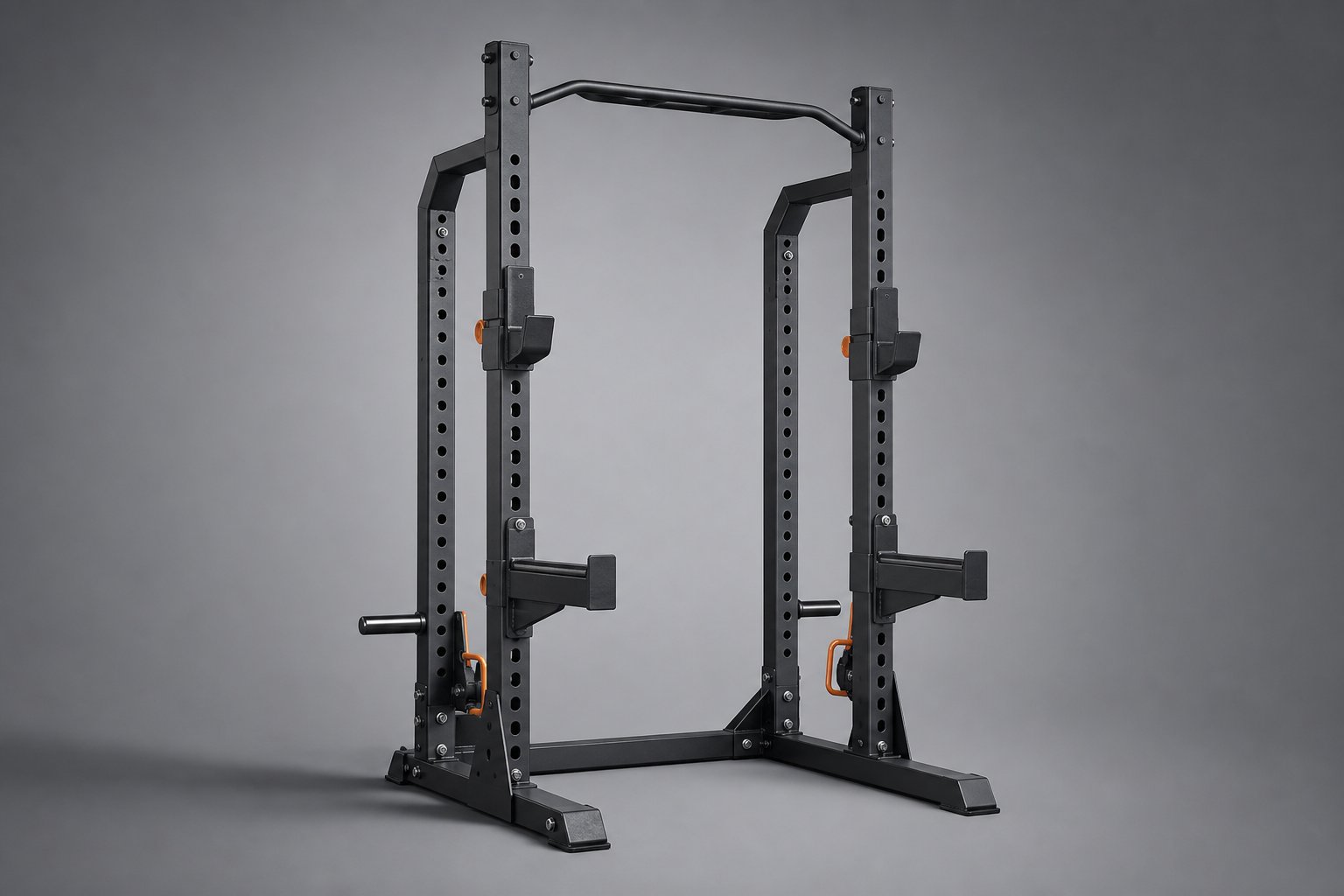
Compare squat racks, benches, Smith machines, cable crossovers and multi-stations against the intended users, duty profile, site and training movements. Specify frame materials, dimensions, adjustment, load-test conditions, assembly and safety requirements. Request the actual manufacturer's model documentation and applicable test evidence, then confirm branding, quantities, production milestones and service terms.
Equipment and production images are generated illustrations. They do not document a named supplier, factory, test or stocked model.
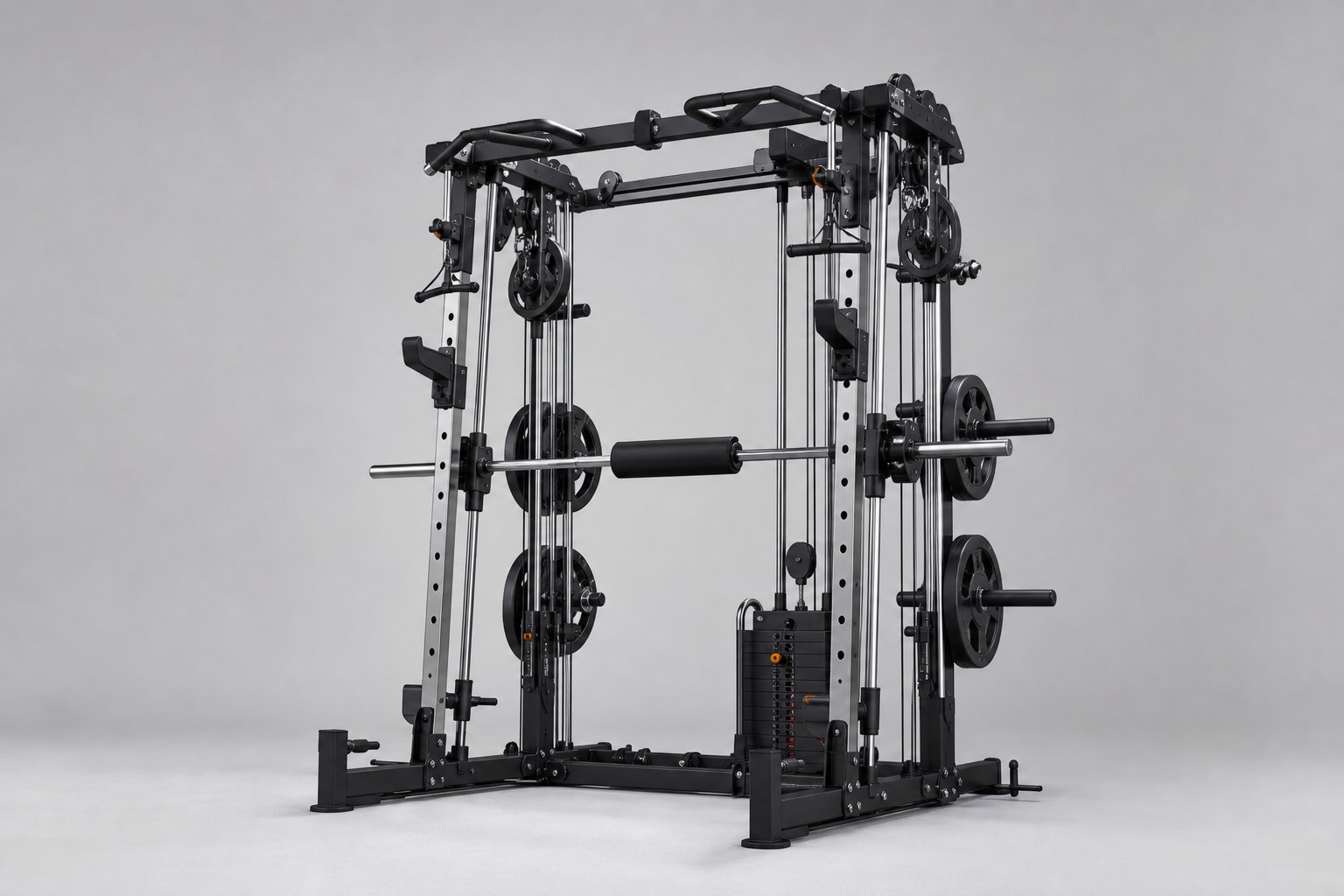
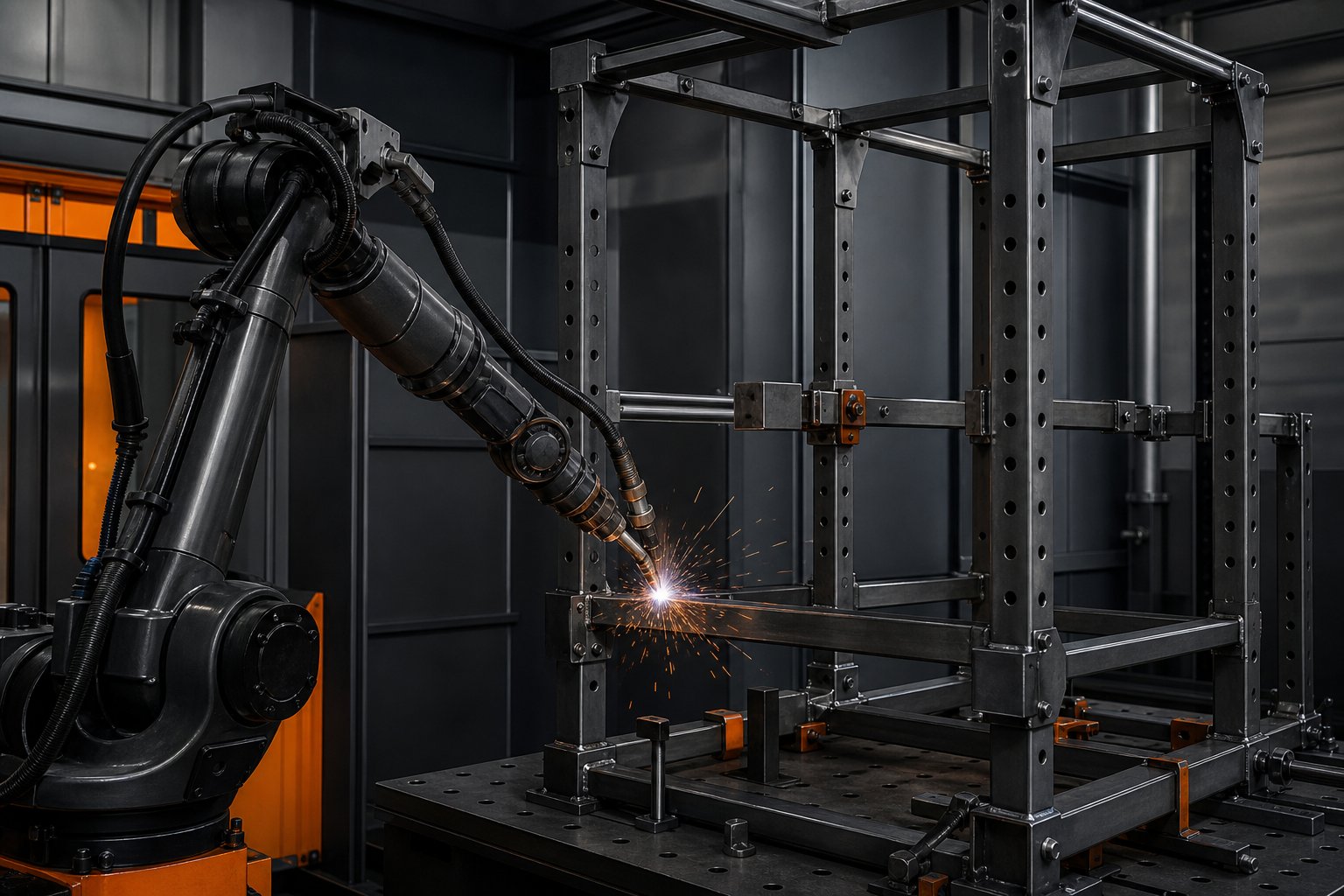
Describe the anticipated frequency, duration and conditions of use rather than relying on a commercial or home label. Agree measurable requirements for frame geometry, welds, mechanisms, loading, finish and assembly, and connect each accepted specification to its inspection or test record.
Specify installed height, hole layout, bar supports, safeties, load-test conditions and installation clearances. Request the manufacturer's assembly and anchoring requirements for the selected model.
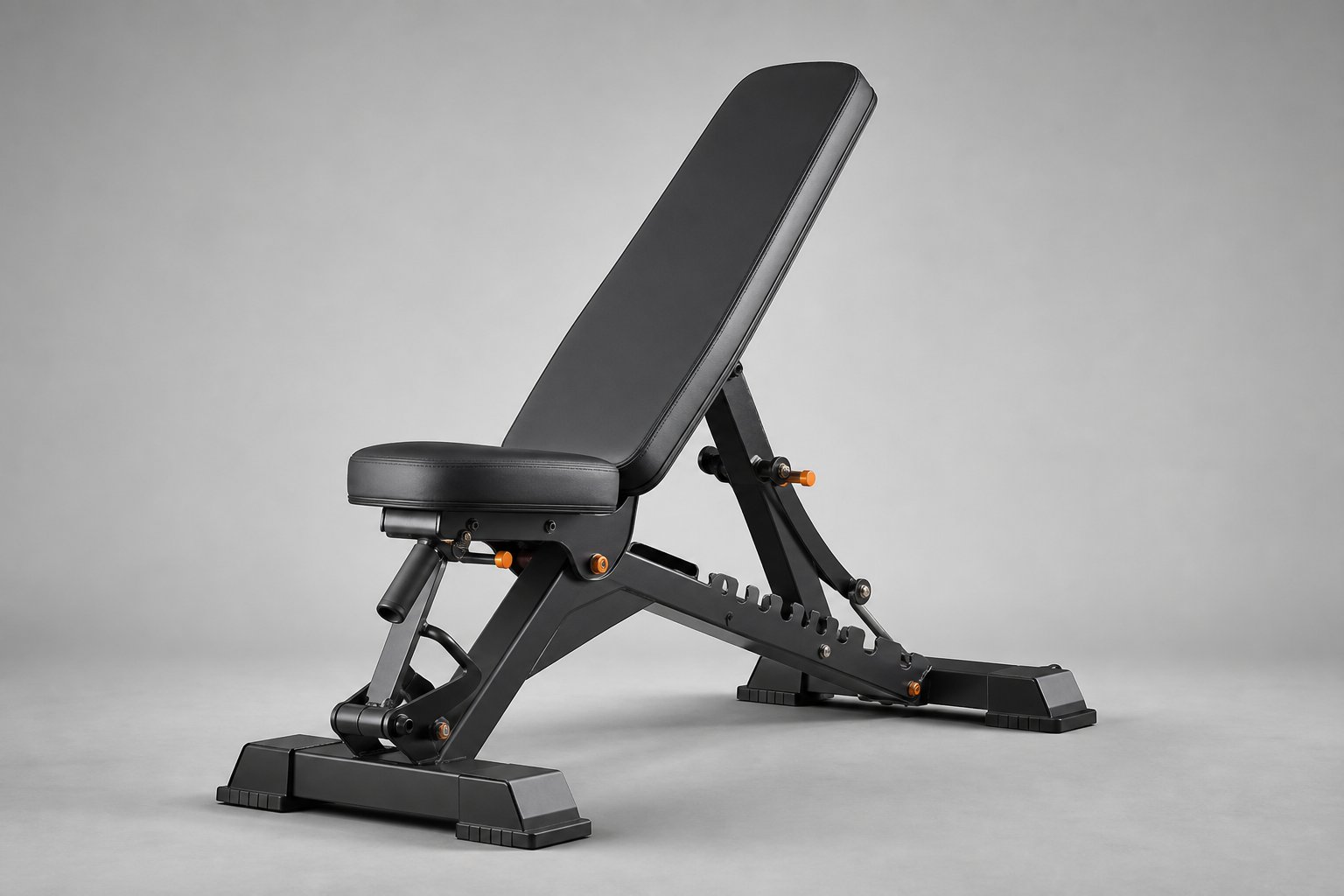
Define back-pad and seat geometry, adjustment positions, locking mechanisms and the rated-load test basis. Confirm upholstery, stability and the inspection evidence for the named model.
Compare the guide system, rail geometry, bar travel, locking positions and loading compatibility. Request actual component identifiers, inspection criteria and maintenance information.
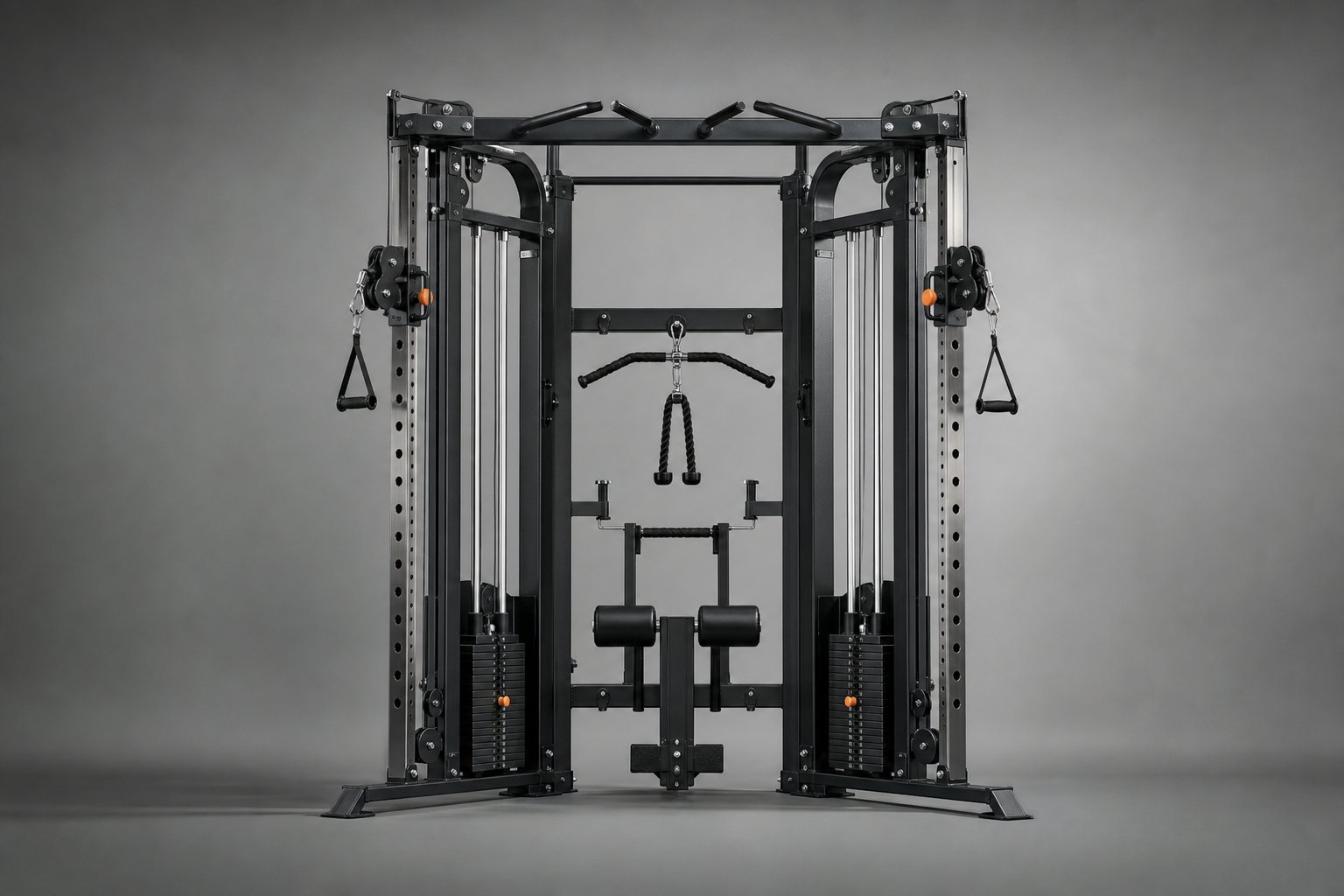
Specify pulley ratios, stack configuration, cable routing, usable travel and attachment interfaces. Compare the load felt by the user with the stated stack mass under a defined measurement method.
Develop the station layout around training movements, available space, access and assembly. Confirm whether proposed modules share compatible components, and define the actual configuration before pricing.
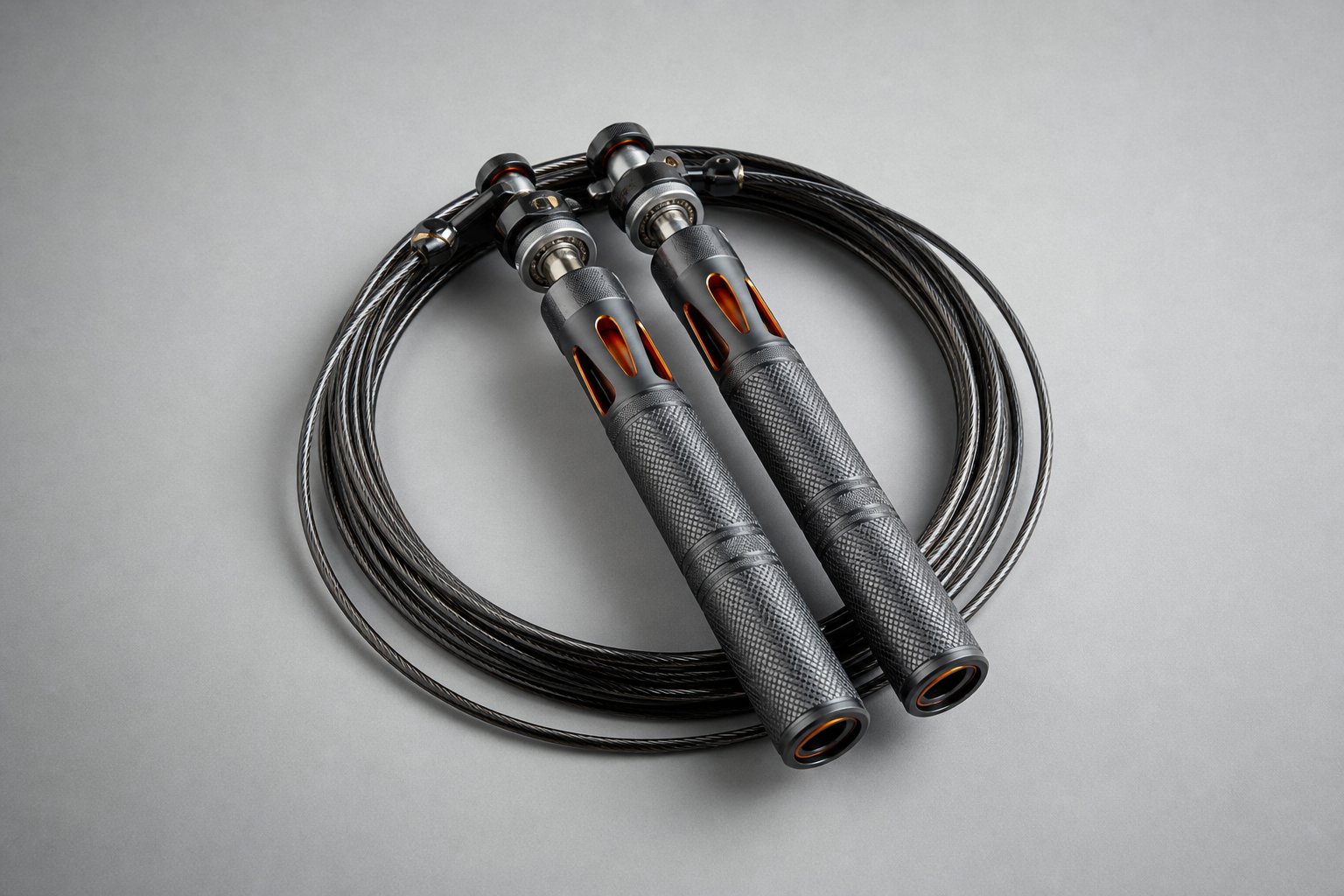
List required ropes, handles, straps and bars, and confirm connector dimensions, load compatibility, materials and packing. Assess consolidation only after the actual SKU quantities and carton details are available.
| Dimension | Commercial-use proposal | Domestic-use proposal |
|---|---|---|
| Upright spec | Confirm grade, section and wall thickness | Confirm the proposed frame specification |
| Rail system | Identify bearings, guides and maintenance needs | Identify bushings or bearings and the guide design |
| Pad surface | Specify covering, foam and acceptance checks | Specify material, density and durability checks |
| Fatigue testing | Request applicable model tests and conditions | Request applicable model tests and conditions |
| MOQ / lead time | Confirm quantity, branding scope and production milestones | Obtain model-specific quantities, costs and scheduling assumptions |
| Warranty | Agree coverage, duration, exclusions and claim costs | Agree coverage, duration, exclusions and claim costs |
Identify the applicable parts and use classification of ISO 20957 for the actual indoor stationary equipment. A commercial or home label is not test evidence. Request reports matching the named model and revision, including the conditions relevant to load, stability and durability.
Start with the intended users, frequency, duration, site supervision and installation conditions. Compare the manufacturer's proposed configuration and applicable test evidence against that brief. Confirm whether any alternatives actually share components or tooling; neither a use-class label nor a warranty duration should be assumed from the product name.
Request quantities separately for stock items, branding or packaging changes, and structural or tooling development. Agree sample stages, costs, approval dates and production milestones for the chosen model. Confirm carton data and consolidation feasibility before comparing freight options.
Compare transport, warehouse acceptance, assembly and final delivery for the actual cargo and destination. Agree packaging verification, damage evidence, claim deadlines and who pays replacement, labour and freight. Confirm the named service providers before offering delivery terms.
Describe the desired logos, colours, packaging and manuals. Ask the proposed manufacturer which methods are feasible, and confirm artwork rights, samples, quantities, costs and approval requirements. Retain any required manufacturer, importer and safety identification.
Weight-loading options and material comparisons to pair with your racks.
Regional context and supplier-specific process questions for the proposed equipment.
Review applicable standard parts, use classification, inspection responsibilities and required reports.
Share your categories, quantities, intended use, destination and target retail price range. Include the required ship date and any known technical, packaging or document requirements so the sourcing team can respond to the specific project.