Ningjin, Xiamen, Qingdao, Pizhou, Dingzhou and Yongkang/Wuyi provide starting points for fitness-equipment category research. For each proposed source, verify the legal entity, manufacturing address, production scope, subcontracted work and relevant product references. Regional reputation is not evidence of a particular supplier's capability.
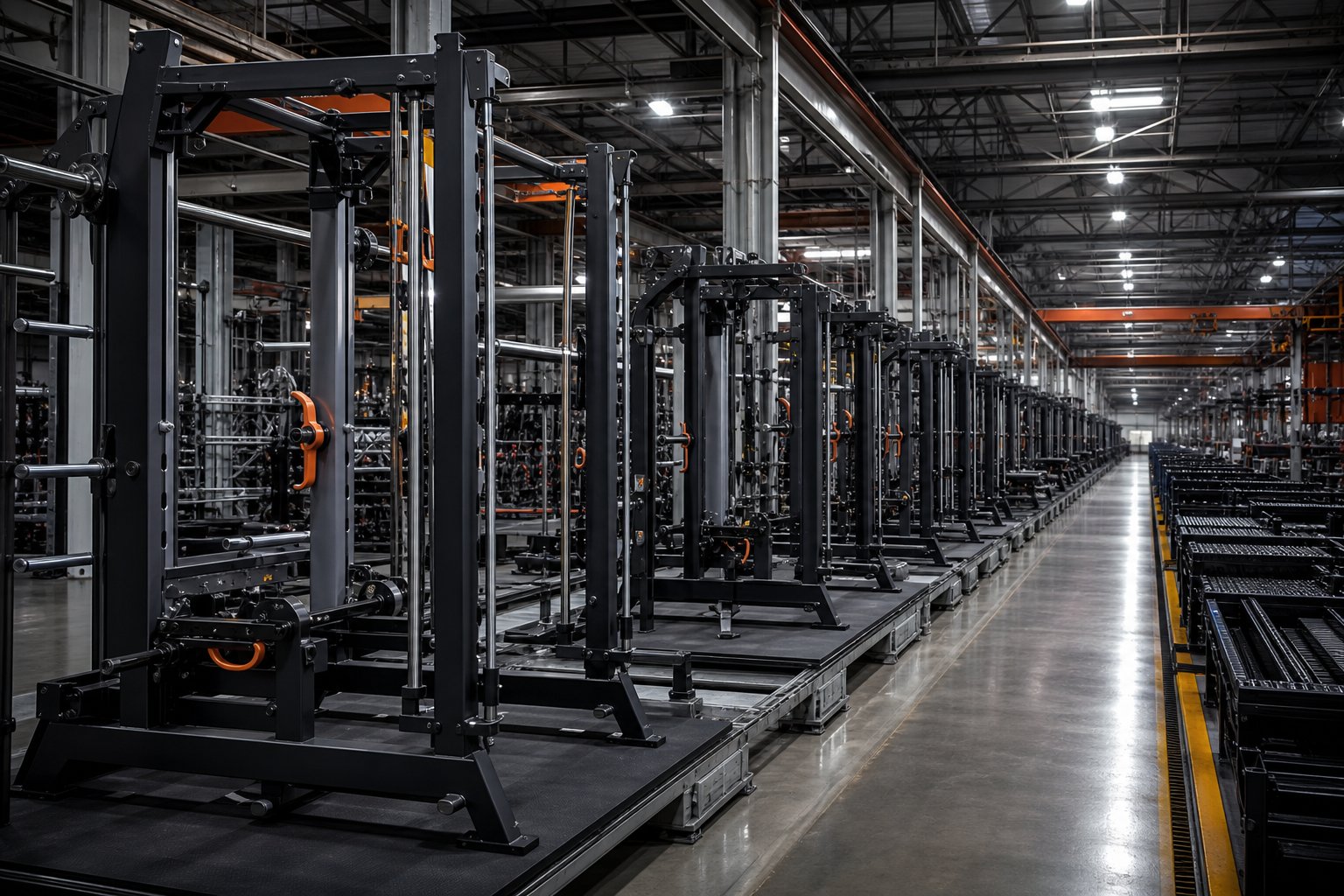
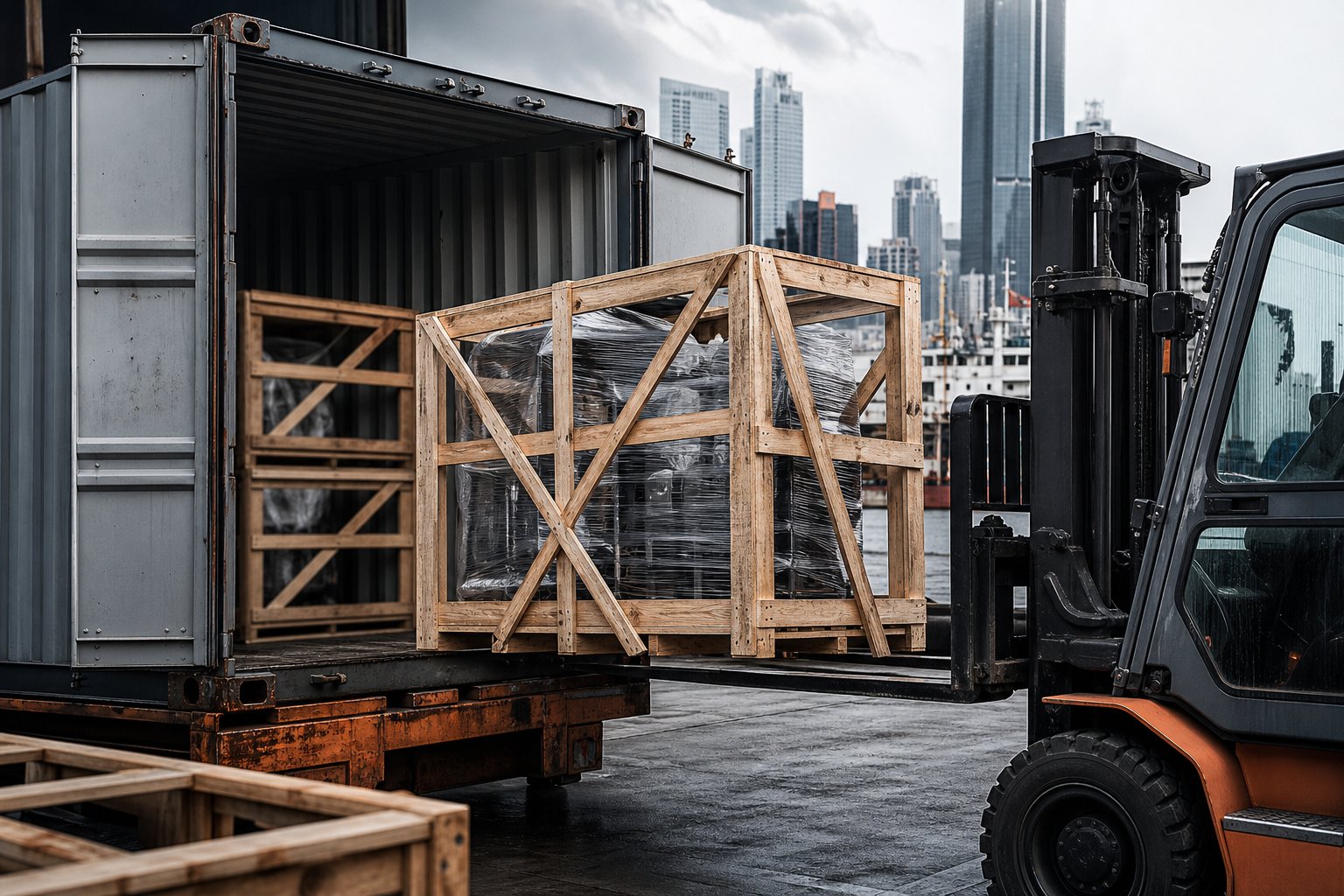
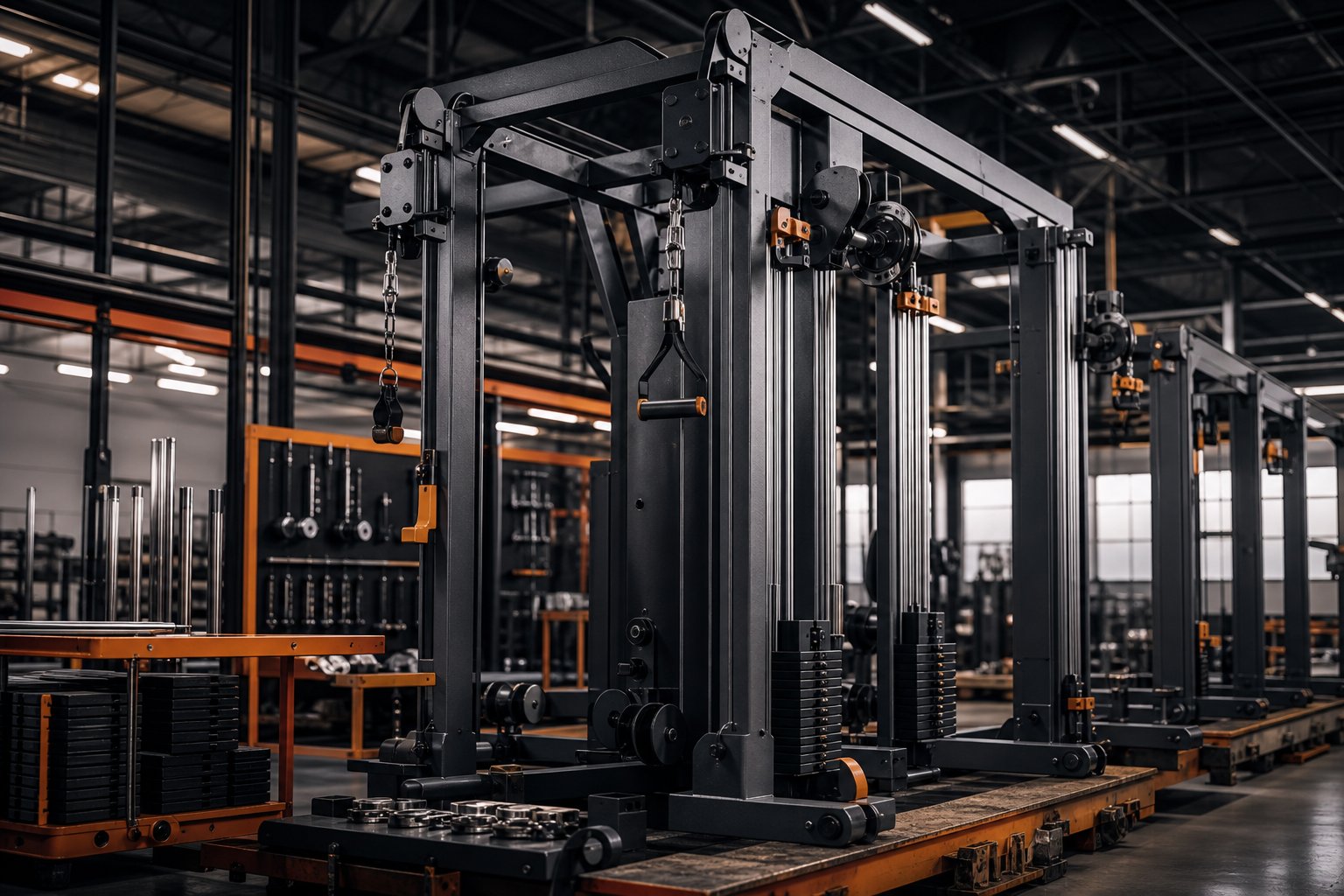
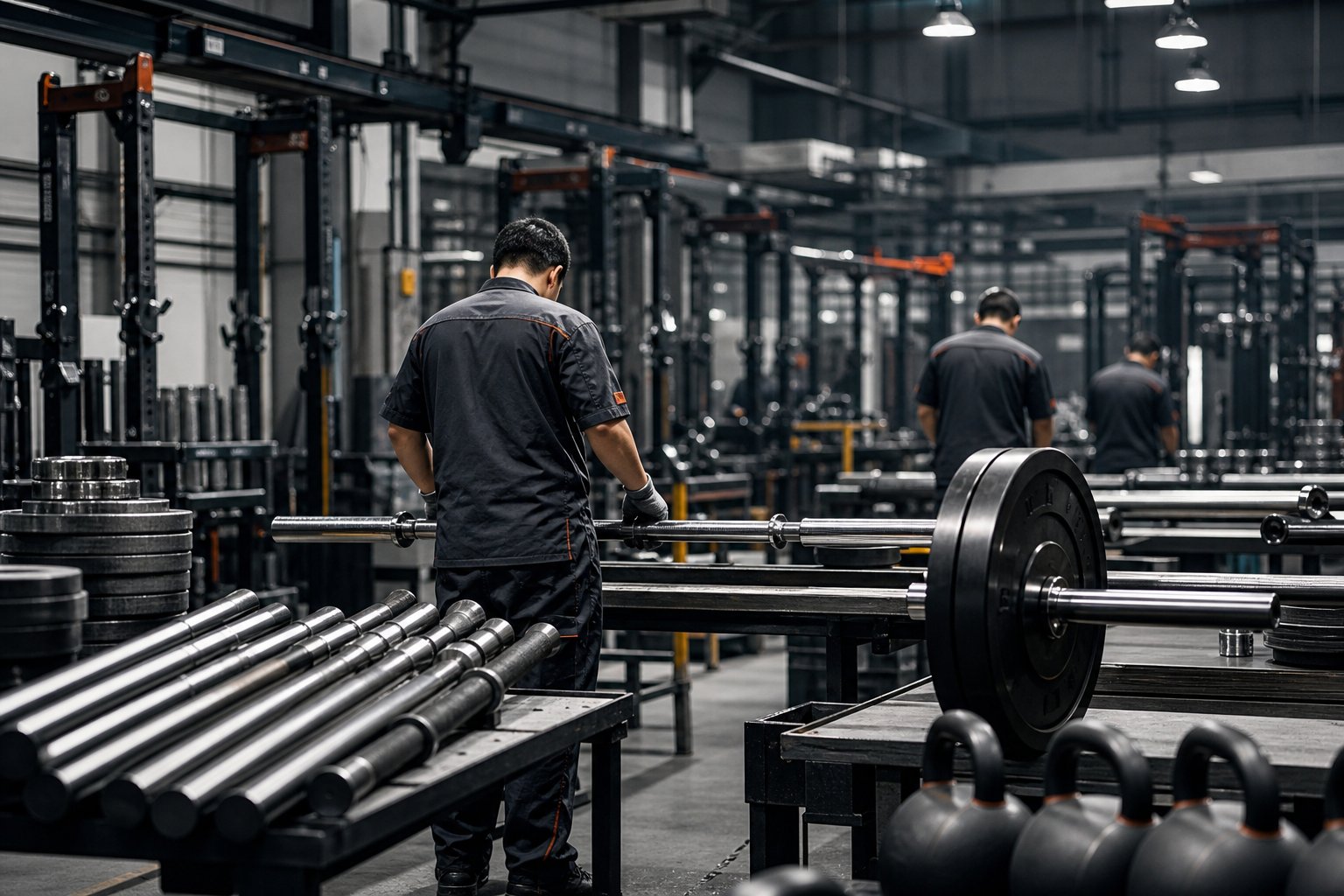
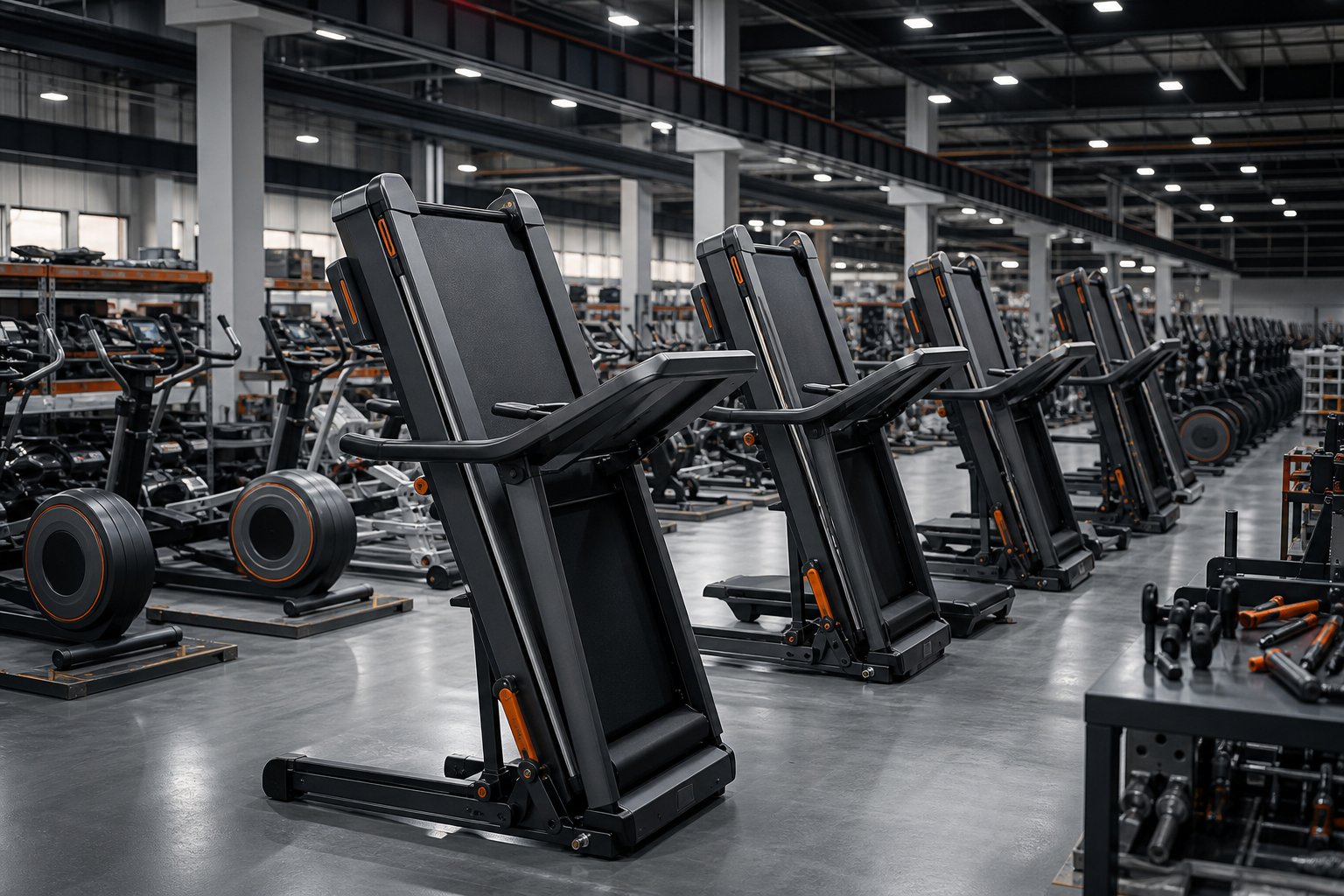
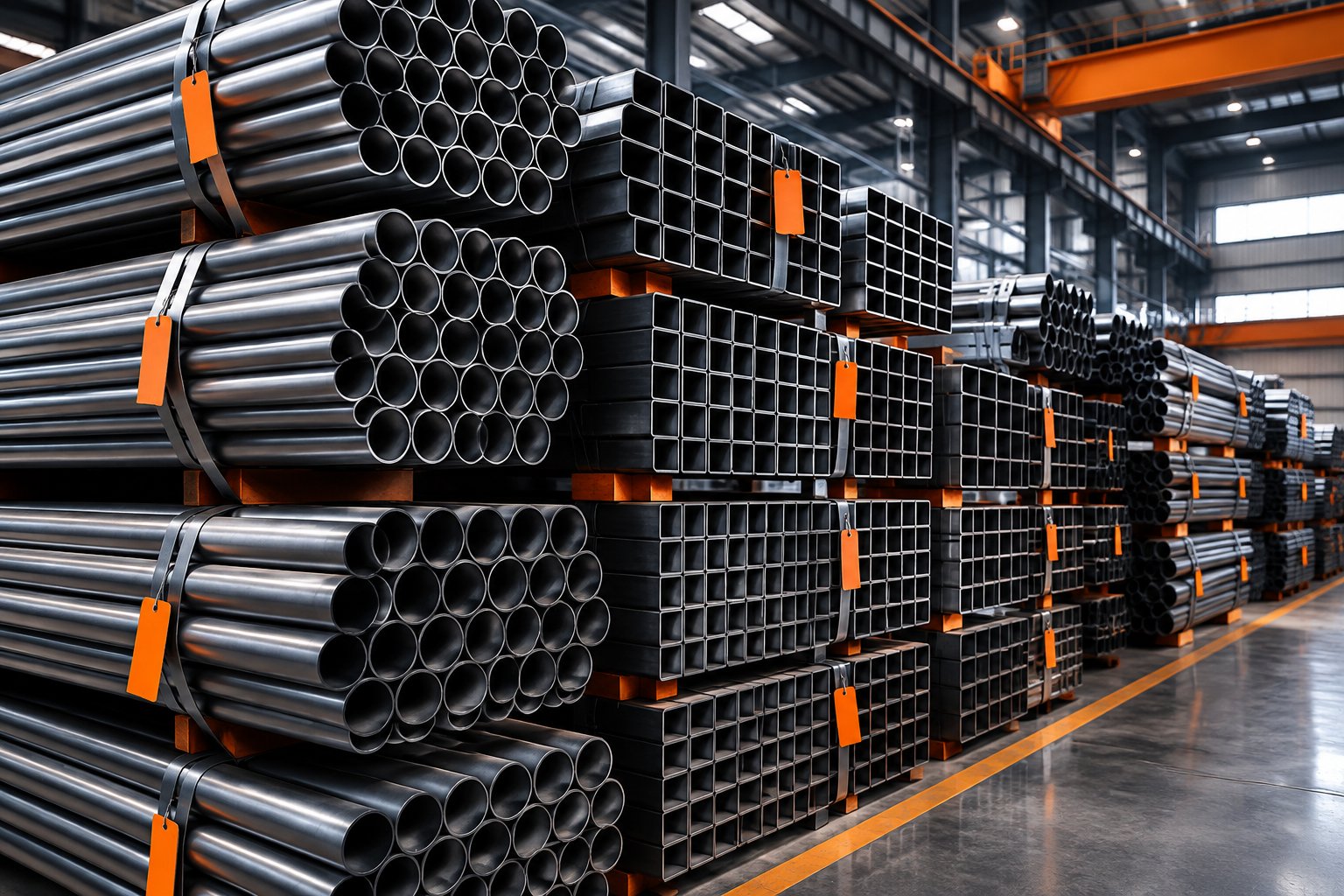
Equipment and production images are generated illustrations. They do not document a named supplier, factory, test or stocked model.
Use the dated public context below for research, then assess each named supplier separately. Request the actual manufacturing address, operations performed on site, subcontracted work, model references and available inspection records. Public information about another enterprise does not establish a relationship with FITORIGIN.
A 2025 report on the General Administration of Sport website describes nearly 3,000 related businesses in Ningjin, RMB 13.9 billion in 2024 output and more than 70% of the domestic commercial-equipment market. These are regional figures, not company sales or capacity; verify the proposed manufacturer separately.
Compare treadmill, rowing-machine and other cardio proposals by motor rating, running surface, resistance system, electrical configuration, noise test conditions and maintenance access. Confirm the actual manufacturer and product documentation for each proposal; do not infer its component availability or delivery time from regional promotion material.
For complete-machine proposals, compare destination voltage, plugs, manuals, labels, assembly, inspection evidence and after-sales arrangements. Verify the named supplier and model rather than treating another company's disclosures as proof of its manufacturing or quality system.
For multi-station, cable and free-weight proposals, compare frame construction, pulley layout, dimensions, floor-space needs and assembly instructions. Request factory identity and relevant export references for the proposed source.
A General Administration of Sport report describes more than 400 sports-goods businesses and output exceeding RMB 11.3 billion in Dingzhou at the end of 2021. Use this dated context alongside supplier-specific checks on product range, material, production and inspection.
Compare home-cardio and small-item proposals for pack size, assembly, user instructions and replenishment. For braces, also evaluate specialist sources such as Yangzhou and Jizhou by intended use, sizing, material and supplier documentation; confirm any medical-device status before making medical claims.
Primary regional references include the General Administration of Sport reports linked below. The Ningjin and Dingzhou figures retain their publication and reporting years. Other regional entries are procurement research prompts and do not claim factory ownership, supplier approval or production capacity.
Confirm which operations are needed for the chosen design, where they occur and who owns each inspection record. Agree the method and acceptance criteria instead of assuming every supplier uses the same machinery or routing.
Ask how tubes and plates are cut and how dimensions, edge condition and weld preparation are checked for the approved design.
Confirm the bending process, tooling, bend radius and dimensional checks for the specified tube and frame geometry.
Identify the welding method, joint requirements and any subcontracted work. Request model-specific controls for weld quality and frame distortion.
Review the surface preparation required for the material and coating system, including cleanliness, contamination control and inspection records.
Confirm coating materials, application method, preparation, film-thickness checks and adhesion testing for the actual process.
Request the curing requirements and records for the selected coating system, including the checks needed to assess finish consistency and durability.
Agree assembly checks and applicable function, load and durability tests for the named model, including the report owner and release criteria.
Choose packaging and reinforcement for the actual weight, dimensions, route and handling risks; define component fixation and verification requirements.
The process list is a set of supplier-review topics. A machine vendor's specification or another factory's example is not an acceptance result for the proposed source. Define the actual inspection and document plan on the Quality and Compliance Planning.
Confirm material availability, stock or production basis, replenishment dates and test capability with the named supplier. Identify critical material sources, any subcontracted checks, approved alternatives and the records required before release.
Check the overall market before choosing a source. Every figure below states its basis and year — customs codes vary widely, so we only cite clearly labeled data.
Source: CSGF's 2024 industry report analysis, linked below. Keep the year and category definition with each figure; the treadmill category is reported separately from other fitness and rehabilitation equipment.
| US import-cost checks for the actual tariff classification | Rate | Notes |
|---|---|---|
| MFN base rate | Confirm full tariff code and import date | Determine the complete classification and check the current schedule with the importer or customs broker. |
| Section 301 surcharge | Check any applicable additional duties | Confirm origin, classification and the measures applicable on the actual import date. |
| IEEPA/reciprocal overlays | Varies with policy | Separate product price, freight, duties and other charges; record the delivery term and who is responsible for each cost. |
Consult the current USITC Harmonized Tariff Schedule and confirm the actual classification, origin and import date with the importer or customs broker. No fixed rate on this page is a quotation for the proposed order.
Use regional research to identify candidates, then verify the actual manufacturer, product scope and records rather than forcing unrelated products through one assumed factory.
Define category-specific checks, acceptance criteria, sampling and report ownership within a common procurement brief. Review the actual records for each supplier and model before release.
Compare cargo dimensions, weights, packaging compatibility, handling constraints and destination charges. Confirm consolidation parties, documents and handover responsibilities for the proposed load.
Determine product-specific standards and legal requirements, then request matching declarations, reports, manuals, labels and trade documents from the responsible supplier. Record missing items and release conditions.
List part identifiers, compatibility, tooling ownership, supply period, stock location, pricing and warranty responsibilities. Confirm who dispatches parts and who pays labour and freight.
For larger units, compare ocean freight, warehouse acceptance, assembly and final delivery. For smaller items, compare parcel limits and costs. Confirm stock location, providers, coverage and dispatch dates for each proposed arrangement.
Share your categories, quantities, intended use, destination and target retail price range. Include the required ship date and any known technical, packaging or document requirements so the sourcing team can respond to the specific project.