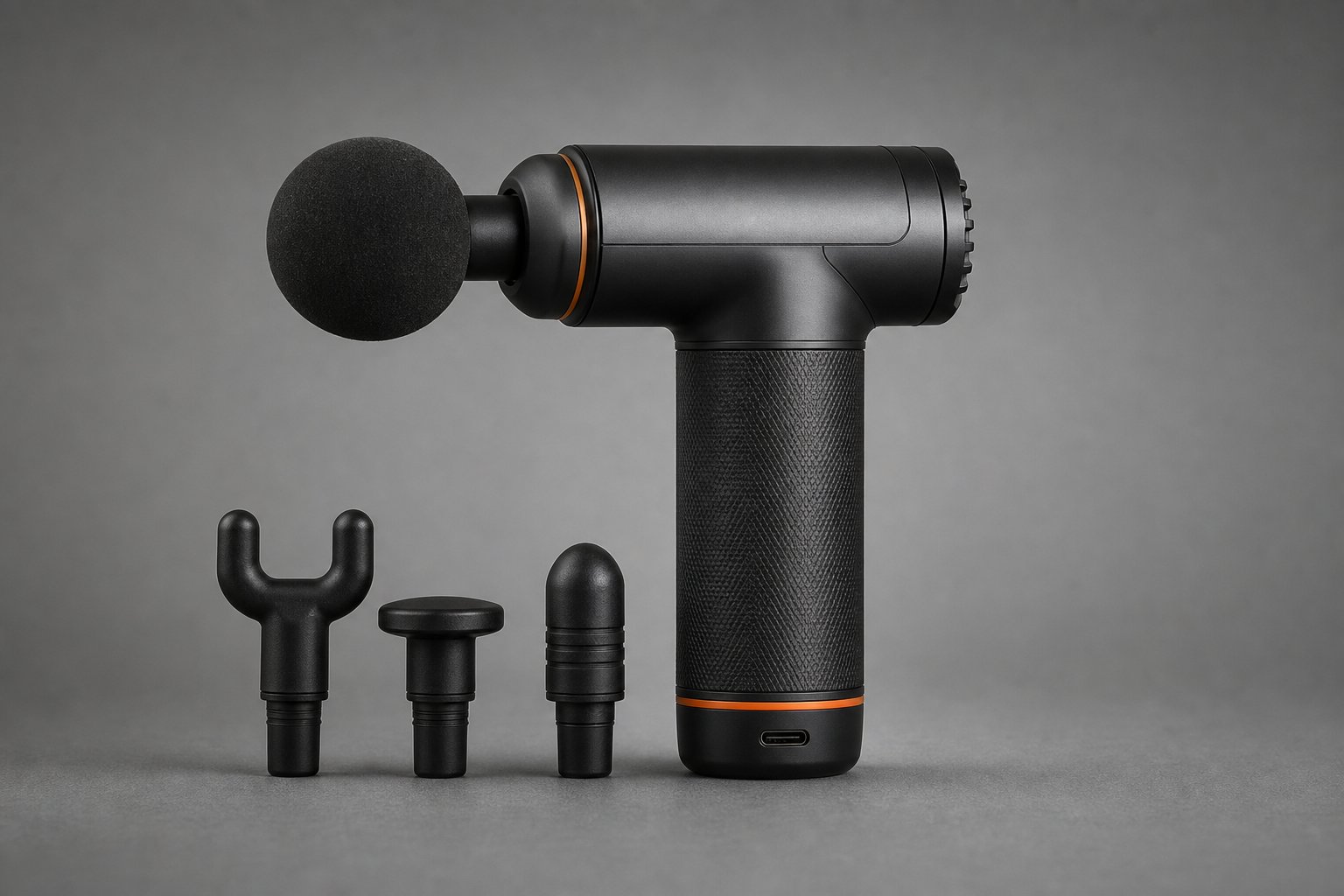
Any fitness device with a lithium battery — massage guns, smart jump ropes, heated recovery tools — crosses from ordinary shipping into dangerous-goods territory, and the rules that govern it are not carrier whims but an international framework: UN38.3 testing at the cell and battery level, state-of-charge limits for air transport, packaging and labeling requirements, and carrier variations on top. Sellers who learn the framework once ship these products smoothly for years; sellers who treat battery shipping as ordinary parcel shipping meet rejected shipments, frozen inventory and, in the worst cases, safety incidents. This guide maps the framework as it applies to a massage-gun-type product.
UN38.3: the test behind every legal battery shipment
UN38.3 is the United Nations testing regimen that lithium cells and batteries must pass before they can be transported by air: altitude simulation, thermal cycling, vibration, shock, external short circuit, impact and overcharge tests, among others. The seller's practical obligations are documentation, not laboratory work: the battery or device manufacturer holds the test summary, and a seller sourcing massage guns or similar devices should obtain and file it before the first shipment, because forwarders and carriers ask for it and its absence stops a shipment faster than any other single missing document. A supplier who cannot produce a UN38.3 test summary for their battery is telling you their supply chain is not audit-ready, which is worth knowing before the order, not at the airport.
Watt-hour ratings: which tier your device falls into
Lithium battery regulation tiers by watt-hour rating and configuration: small batteries installed in equipment (the typical massage gun, at well under 100Wh) ship under simplified provisions for small lithium batteries contained in equipment, with quantity limits per package and specific marks. Standalone spare batteries face stricter handling than batteries installed in the device they power. Knowing where a product sits — battery watt-hours, installed versus standalone, package counts — is what turns a vague fear of dangerous goods into a concrete, manageable shipping specification, and it is a calculation the seller should own rather than delegate entirely to the factory.
State of charge: the 30 percent rule for air transport
For standalone lithium batteries transported by air, regulation caps state of charge at 30 percent of rated capacity, a fire-risk reduction measure that has been mandatory for years; batteries contained in equipment have different allowances but still benefit from managed charge levels for safety. The practical effect for sellers is coordination with the factory: production and packing lines must ship batteries at the required charge state, and this belongs in the purchase specification rather than being discovered as a relabeling exercise at the freight forwarder. A shipment held because batteries were packed fully charged is a fully avoidable delay.
Marks, labels and documents: the shipment's paperwork skin
Lithium battery consignments carry specific marks and labels — the lithium battery mark with the UN number, package orientation and handling labels as applicable — plus shipping papers declaring the contents correctly. The marks themselves are cheap; the failure mode is their absence, which turns a routine shipment into a rejected one at the first inspection point. A one-page shipping spec per SKU — battery rating, marks required, documents attached, carrier lane approved — keeps every future shipment consistent, and new staff can execute it without dangerous-goods training beyond the basics.
Lane selection: not every channel accepts batteries
Carrier and lane acceptance for lithium batteries varies enormously: dedicated dangerous-goods-capable freight lanes handle them routinely; some postal and economy channels refuse standalone batteries outright or accept only installed-in-equipment configurations; and destination-market rules add their own layer. The shipping lane for a battery-powered product must therefore be chosen for battery capability first and price second — the cheapest lane that rejects batteries delivers a zero-percent success rate, which is not cheap. Sellers should validate the lane with a test shipment before routing volume, exactly as they would validate a new supplier.
Safety culture beyond compliance
Compliance is the floor, not the ceiling: battery incidents in transit are rare precisely because the framework is followed, and sellers add real margin of safety with small habits — damaged or returned units with batteries get quarantined and inspected rather than restocked into the shipping flow, swollen batteries are a never-ship condition, and storage areas keep batteries away from heat and combustible packaging at proper charge levels. These habits cost almost nothing, and they are what distinguish a seller who ships batteries for a decade from one who makes the news.
| Requirement | What it covers | Who provides it |
|---|---|---|
| UN38.3 test summary | Cell and battery safety testing | Battery/device manufacturer |
| Marks and labels | Package identification | Shipper (spec by seller) |
| State of charge | Air transport fire-risk control | Factory packing |
| Lane validation | Carrier acceptance for batteries | Seller with forwarder |
Conclusion
Battery-powered fitness devices ship legally and smoothly when the framework is learned once: UN38.3 documentation filed before the first order, watt-hour tier and configuration understood, charge state written into the purchase spec, marks and documents standardized per SKU, and a lane validated for batteries specifically. Do this and the massage-gun category ships like any other; skip it and every shipment is a gamble. Tell us your battery device mix and destination markets and we will help spec the compliant lane.
Frequently asked questions
What is UN38.3 and who holds the test summary? The UN testing regimen lithium batteries must pass for air transport; the battery or device manufacturer holds the summary, and the seller should obtain and file it before the first shipment.
Why does state of charge matter for air shipments? Standalone lithium batteries are capped at 30 percent charge for air transport as a fire-risk measure; shipping fully charged batteries invites holds and rejections.
Can any shipping lane carry battery devices? No - acceptance varies by carrier and lane, some channels refuse standalone batteries outright, and the lane must be validated for battery capability before routing volume.