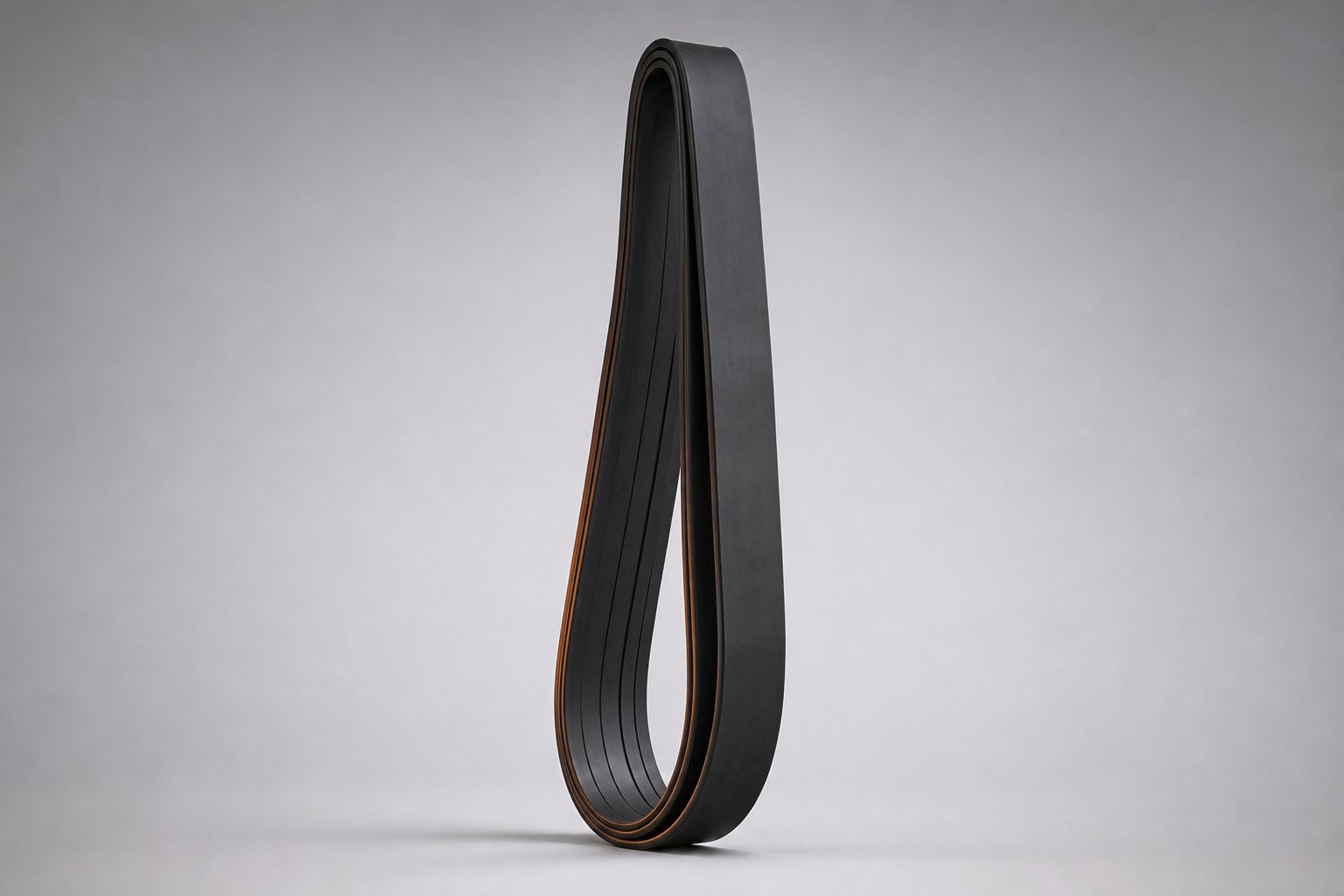
Pull-up assist bands solve a genuine training problem — bodyweight pulling strength is one of the slowest movements to progress, and a band that removes just enough bodyweight to allow controlled reps is the single most effective tool for getting a beginner from zero pull-ups to their first unassisted rep. This makes assist bands unusually well suited to content-driven selling: the progression itself is a story, with a clear before-and-after arc that performs well in demonstration video. This guide covers the thickness tiers that structure a real progression and how to turn that structure into content that sells the full set rather than a single band.
Why assist bands work: removing just enough bodyweight
Pull-up strength progresses more slowly than almost any other bodyweight movement, and a tool that lets a beginner practice the correct movement pattern under reduced load solves a real coaching problem rather than just offering an easier alternative. A pull-up assist band works by looping around the pull-up bar and under the user's knee or foot, providing upward assistance proportional to how much the band is stretched at the bottom of the movement — heavier bands provide more assistance and are used by beginners who cannot yet control their own bodyweight through a full rep, while lighter bands provide a smaller nudge for lifters close to performing unassisted pull-ups. This mechanism is genuinely effective training science, not just a beginner crutch, which is worth stating explicitly since some buyers assume band-assisted training is a lesser form of the exercise rather than a legitimate progression tool used by serious strength coaches.
The four-tier thickness system
A complete progression set spans roughly 41-175lb of assistance across four bands: extra-light (5-15lb) for the final stage where a lifter needs only a small nudge near an unassisted rep, light (15-35lb) for intermediate progress, medium (35-65lb) for lifters who can complete some reps but need meaningful help, and heavy (65-175lb) for true beginners who need maximum support to move through a full range of motion safely. Selling these four bands as a single progression kit, rather than four disconnected SKUs, matches exactly how a buyer actually uses the product over months of training.
Construction: continuous layers versus single-ply
Heavier assist bands are typically built from continuous layered latex rather than a single-ply sheet, because the layered construction distributes stretch stress more evenly across the band's width and resists the tearing that a single-ply band under heavy repeated load can develop at its narrowest point. This construction detail is worth specifying to suppliers explicitly for the heavy and medium tiers especially, since these bands see the most aggressive stretch cycling from beginner users who put the most load through them during each rep.
Programming guidance: what buyers actually need to know
A band alone does not teach programming, and buyers benefit from simple guidance alongside the product: start with the band that allows 5-8 controlled reps with good form, progress to the next lighter band only once 3 sets of 8 reps feel genuinely controlled rather than rushed, and expect the full progression from heaviest to unassisted to take anywhere from 2 to 6 months depending on starting strength. Including this guidance directly in packaging or a linked content page turns a commodity band set into a coached product, which is a meaningful differentiator in a category with otherwise low switching costs between suppliers.
Content strategy: the progression arc as the product story
Few fitness product categories have as natural a content arc as assist bands: the same user, filmed at intervals over weeks or months, visibly needing a thinner band each time, culminating in an unassisted pull-up. This progression narrative performs disproportionately well in short-form video relative to the product's low unit cost, and sellers building a content strategy around this category should plan for a multi-week documented progression rather than a single demonstration clip, since the arc itself is what drives engagement and purchase intent.
Anchor points and door-frame compatibility
Beyond a pull-up bar, buyers increasingly want bands usable with door-frame anchors and portable rigs for home training, which means door-anchor compatibility and a stated maximum safe anchor-point load are worth including on the spec sheet rather than assuming every buyer has access to a wall-mounted or free-standing pull-up station.
| Tier | Assistance range | Typical user |
|---|---|---|
| Extra-light | 5-15lb | Near unassisted, final stage |
| Light | 15-35lb | Intermediate progress |
| Medium | 35-65lb | Some reps, needs help |
| Heavy | 65-175lb | True beginner |
Conclusion
A four-band progression kit, sold with simple programming guidance and supported by content documenting the progression arc, converts better than a single band listed in isolation — this category's product story is genuinely compelling when structured correctly. Tell us your target price tier and we will match the band thickness set and packaging accordingly.
Frequently asked questions
How many pull-up assist bands does a beginner need? A full four-tier progression set (heavy through extra-light) supports a beginner from zero pull-ups through to unassisted reps over several months.
Is band-assisted pull-up training less effective than unassisted training? No — it is a legitimate progression method used by serious strength coaches to build toward full unassisted reps safely.
Why does band construction matter for heavier assist bands? Continuous layered latex distributes stretch stress more evenly than single-ply construction, resisting tearing under the heaviest, most frequent use.