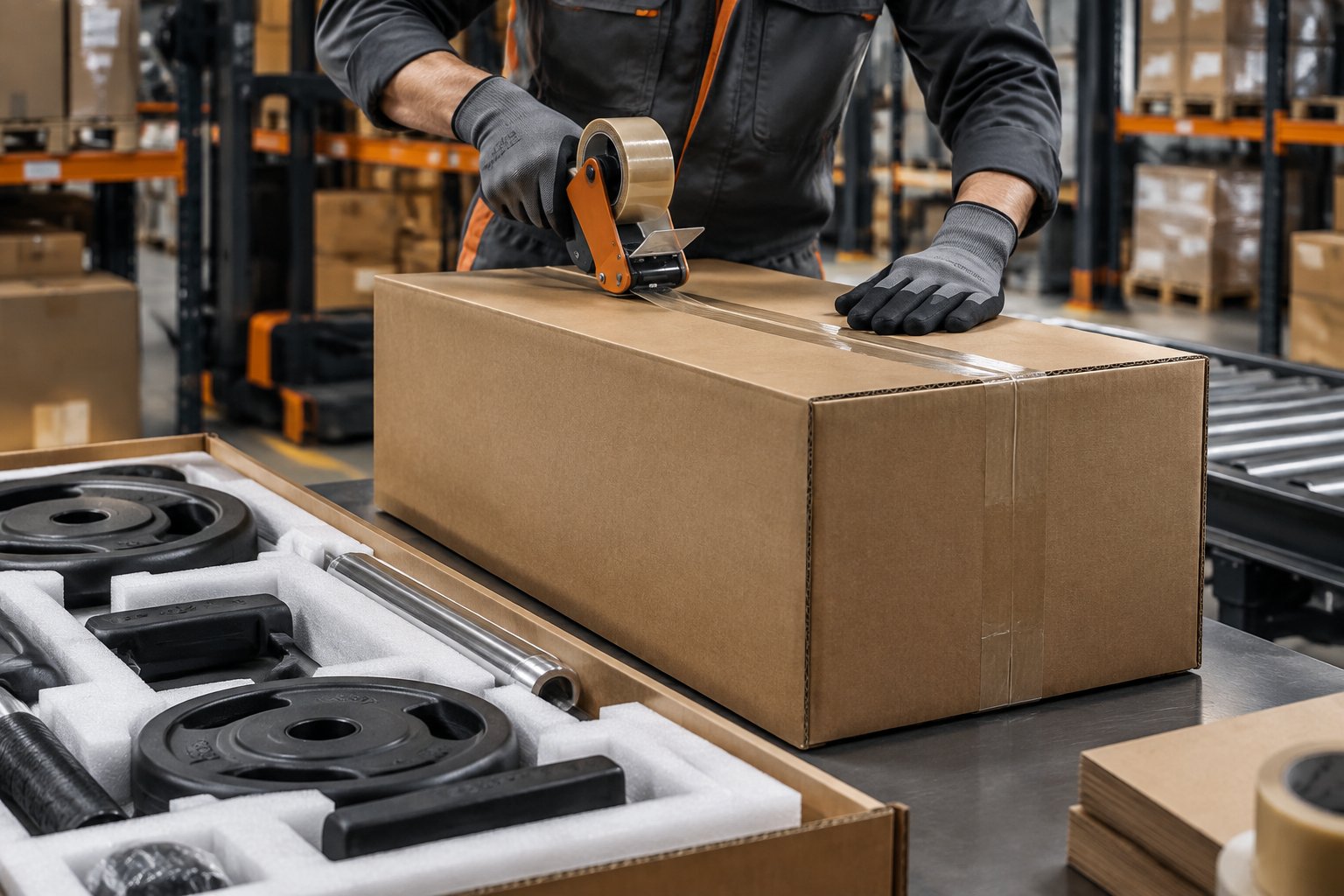
A customer who orders a 90kg treadmill expecting doorstep delivery, then learns the driver will leave it on the curb, becomes a support ticket and quite possibly a chargeback. Delivery tier on heavy fitness equipment is not a logistics footnote — it is a purchase-decision factor and a review factor, and the sellers who handle it well surface the options and their prices before checkout rather than letting the customer discover the reality at the door. This guide compares the three standard tiers and explains how to present them honestly.
Curbside: cheap, common, and the source of most surprises
Curbside delivery is the default tier for freight-carrier delivery of heavy items, and its actual meaning — driver and liftgate bring the item to the curb or driveway end — is narrower than many customers assume. Everything after the curb is the customer's problem: moving a 90kg treadmill indoors, up steps, through doorways. For buyers with a garage, a helper and the physical capability, curbside at the lowest price is a genuinely good deal; for a customer in a third-floor apartment who assumed home delivery, it is the beginning of a dispute. The tier itself is fine; selling it without explaining what it means is not.
Threshold: the middle tier most catalogs forget
Threshold delivery — placement just inside the first dry, secure doorway — fills the gap between curbside and full white-glove, and it is the tier many catalogs omit entirely, forcing customers to choose between a curb drop and a premium service they may not need. For buyers who can handle assembly themselves but cannot move the machine alone, threshold is exactly the right product, and offering it captures sales that an all-or-nothing tier structure loses. Its cost sits between the other tiers, and its description should be precise about what it excludes: no assembly, no packaging removal, no room-of-choice placement.
White glove: what it includes and when it earns its price
White-glove delivery adds in-room placement, unpacking and assembly, and removal of packaging debris — a genuinely different service that requires trained two-person crews and scheduling, which is why it costs meaningfully more. It earns its price for buyers without the physical ability or help to self-install, for premium product lines where the delivery experience is part of the brand, and for B2B placements like studios where the equipment needs to be operational on day one. Offering it as an option, rather than bundling it into every sale, lets each customer buy the service level they actually need.
Pricing transparency: present all tiers at checkout
The delivery-tier decision belongs at checkout, with all available tiers listed at their real prices, not discovered at the delivery call. Sellers who default customers into curbside and reveal upgrade prices only when the carrier calls generate the exact surprise that converts into chargebacks — a customer who feels tricked into paying more at the doorstep disputes the charge rather than negotiating. Listing tiers with plain-language descriptions (what happens at the curb, what happens at the door, what happens in the room) and honest prices lets the customer choose, which is the entire point of offering tiers at all.
Realistic descriptions beat optimistic ones
Tier descriptions should describe what actually happens, including the limits: curbside means the customer moves it from there, threshold means inside the first doorway only, white glove means scheduled and assembled but not including moves after initial placement. Descriptions that leave room for optimistic misreading generate disputes even when the service itself was delivered as specified, because the customer's expectation, not the carrier's definition, is what they compare the experience against.
Matching tier mix to customer base
The right tier mix depends on who buys: a garage-gym-focused shop can lean curbside-heavy with clear explanations, a consumer brand selling to mixed households needs threshold prominently offered, and a premium line or B2B channel should default toward white glove. Reviewing which tiers customers actually choose after a few months of offering all of them tells a seller where their real demand sits, and lets them negotiate volume pricing with carriers on the tier that dominates.
| Tier | Includes | Relative cost |
|---|---|---|
| Curbside | To curb/driveway only | Lowest |
| Threshold | Inside first doorway | Mid |
| White glove | In-room, assembly, debris removal | Highest |
Conclusion
Delivery tiers on heavy equipment are a customer-choice product, not a hidden logistics detail: curbside for buyers with help, threshold for buyers who can assemble but not lift, white glove for buyers who want it done — all listed with real prices and plain-language descriptions at checkout. Sellers who surprise customers at the door pay for it in chargebacks and reviews at multiples of anything the tier structure saves. Tell us your customer profile and we will recommend the tier mix and presentation approach.
Frequently asked questions
What does curbside delivery actually include for a treadmill? Carrier delivery to the curb or driveway end only — the customer handles all movement indoors, up steps and through doorways from there.
Is white-glove delivery worth the premium? For buyers without the ability or help to self-install, premium lines where delivery is part of the brand, and B2B placements needing day-one operation, yes.
Why list all delivery tiers at checkout instead of defaulting to the cheapest? Surprise upgrade prices revealed at delivery generate chargebacks and one-star reviews at rates that far exceed any margin saved by steering customers to the cheapest tier.