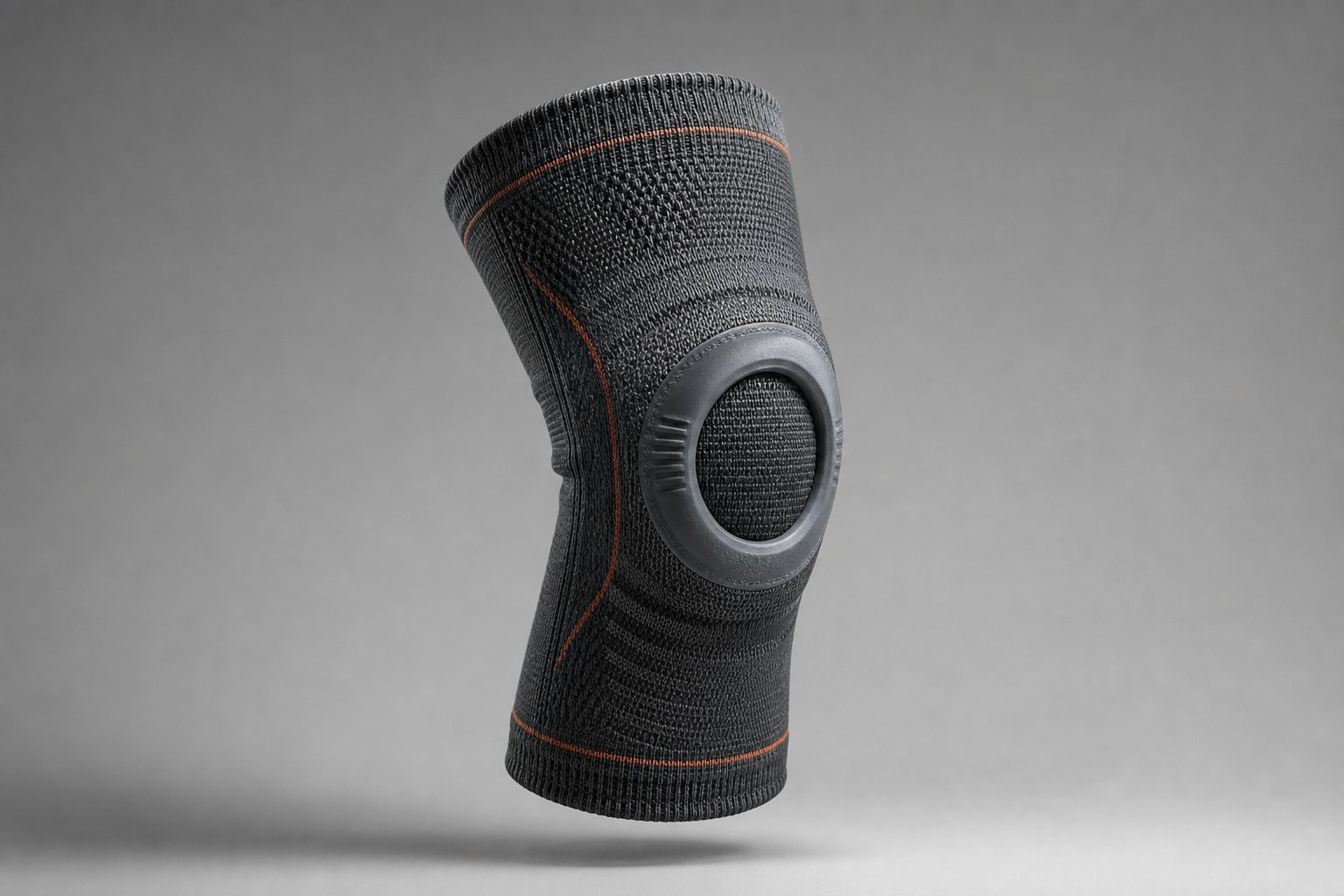
The words on a brace listing decide which regulatory world the product lives in. Described as athletic support — warmth, compression, stability during sport — a knee sleeve is general wellness gear. Described as treating, curing or preventing a condition, the same sleeve slides toward the regulated territory of medical devices, where claims trigger registration expectations, classification questions and enforcement exposure that a fitness seller neither wants nor needs. This guide maps the boundary in practical terms and shows how to write product copy that sells the support without claiming the medicine.
Why claims define the product's regulatory identity
In most regulatory regimes, what makes a product a medical device is not its physical construction but its intended use — and intended use is established by what the seller says. The identical knit sleeve is an unregulated accessory when the listing describes compression for athletic use, and a regulated device candidate when the listing promises recovery from a ligament injury. This is why claims discipline is not marketing fussy-ness but the load-bearing wall of a product's legal position: the copy writes the classification, and the classification determines which rules apply. Sellers who inherit supplier copy wholesale often inherit claims problems written in another market's context, which is why every listing needs a claims pass of its own.
The words that cross the line
The phrases that pull products toward medical territory share a shape: they name conditions, treatments or outcomes that belong to medicine. Treating arthritis, healing tendons, preventing re-injury, accelerating post-surgical recovery, relieving a diagnosed condition, substituting for medical advice — each crosses, whether the sentence is in the title, the bullet points, the description or a customer-facing answer. Comparative medical claims (better than a prescribed brace) cross doubly, because they both claim a medical function and make a comparative efficacy assertion no general product can evidence. The test a copywriter can apply without legal training: would this sentence make sense in a pharmacy's clinical framing? If yes, rewrite.
The words that stay on the athletic side
Claims that describe structure and function in athletic context stay general: supports the knee during squats, provides warmth and compression, stabilizes the joint during lateral movement, helps you feel supported on long runs. These describe what the product physically does and what the athlete experiences, without naming conditions or promising medical outcomes. They also sell: the athletic buyer's motivation is performance and comfort, not treatment, and copy that speaks the athletic language converts with that audience better than borrowed medical gravity. The discipline is consistency across surfaces — a compliant listing with a treatment claim buried in a Q&A answer or an Instagram caption still exposes the product.
Marketplace enforcement: fast, blunt and automated
Before a regulator ever sees a claims problem, a marketplace algorithm usually has: major platforms screen listings for medical-claim patterns and remove or suppress them, often with a standardized notice that gives little negotiating room. The enforcement is blunt — it does not distinguish a deliberate therapeutic claim from a translator's sloppy phrasing or a supplier-provided bullet copied verbatim — which makes prevention cheaper than appeal. Sellers operating across marketplaces should keep a claims-safe master copy per product and adapt outward, rather than letting supplier copy or marketplace-specific drafts accumulate variations that drift over the line one word at a time.
Jurisdiction differences worth knowing
The boundary's location shifts between jurisdictions even where the logic repeats. In the US, the FDA regime defines device status by intended use, with enforcement attention on products making treatment claims. The EU's regime separates personal protective equipment from medical devices with similar claim logic. Japan's and China's regimes each draw their own lines with their own vocabulary. The practical upshot for a multi-market seller is not mastery of each regime but conservatism of the shared copy: claims written to stay clearly athletic in the strictest jurisdiction travel safely everywhere, while copy written to the loosest edge of one market breaks quietly in the others.
Building the claims checklist into the listing workflow
The operational fix is procedural: a short claims checklist run against every listing before publish — no disease names, no treatment verbs, no outcome promises beyond structure and comfort, claims consistent across title, bullets, description, images and answers — and one named person accountable for the pass. The checklist costs minutes; a listing removal during a launch week, or a regulatory inquiry triggered by archived copy, costs the campaign. Enforcement regimes rarely distinguish innocent from careless, and the file of compliant copy is, like every file in this series, the protection.
| Claim type | Example | Status |
|---|---|---|
| Structural / athletic | Supports during lateral movement | Safe |
| Comfort / sensory | Provides warmth and compression | Safe |
| Treatment / condition | Relieves arthritis pain | Crosses the line |
| Medical outcome | Speeds post-surgical recovery | Crosses the line |
Conclusion
Braces and supports sell on athletic language, and athletic language is also what keeps them out of medical-device territory: describe structure, comfort and sport, avoid conditions and treatments, keep the copy consistent across every surface, and run the checklist before publish. The line is knowable, and staying on the right side of it is a copywriting discipline, not a legal budget. Tell us your support-category listings and we will flag the claims that need rewriting.
Frequently asked questions
Can I mention injuries at all in a brace listing? Describing general athletic use is fine; naming conditions, treatments or recovery from medical procedures pulls the product toward medical-device claims territory.
Do marketplace medical-claim removals carry lasting consequences? Repeated strikes suppress visibility and can trigger account review, which is why prevention through a claims checklist beats appeal.
Does the same boundary apply in every market? The logic repeats but the lines shift - copy kept clearly athletic against the strictest jurisdiction travels safely everywhere.