Knee support is not one product, it is three, and stocking the wrong tier for a channel is a fast way to collect returns and one-star reviews about "too loose" or "too stiff." Compression sleeves, hinged braces and rigid post-op supports serve different injury stages and different buyers, and the fabric, closure system and internal structure that define each tier are specific enough to read off a factory spec sheet. This guide sorts the three tiers, explains what actually separates a CrossFit sleeve from a physical-therapy brace, and gives a sizing approach that keeps return rates low.
Tier one: compression sleeves
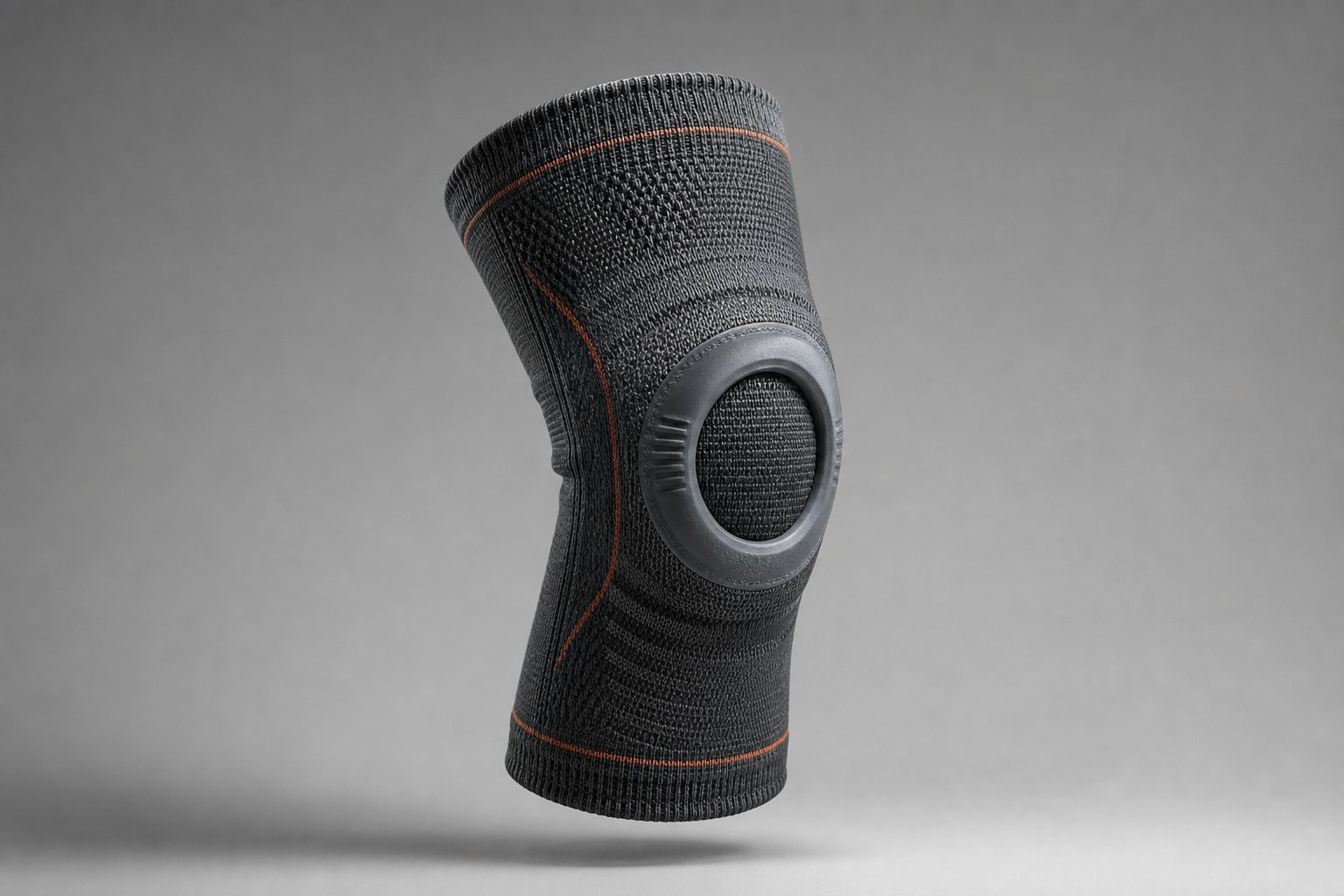
A compression sleeve is a knitted tube, typically nylon-spandex blend, with a silicone patella ring or gel pad that centers over the kneecap to add localized pressure without restricting the joint's range of motion. It has no metal or rigid stays. This tier serves the largest buyer group by volume: weightlifters wanting joint warmth under load, runners managing mild swelling, and anyone wanting light compression during daily activity. Fabric matters here — a knit that is graduated (tighter at the bottom, looser toward the thigh) supports circulation better than a uniform-tension knit, and it is a spec worth asking your supplier to confirm.
Tier two: hinged braces
A hinged brace adds side stays — aluminum, composite or reinforced plastic — set into fabric channels on either side of the knee, combined with a wraparound closure using hook-and-loop straps. The hinges allow controlled flexion and extension while resisting lateral movement, which is the support profile needed for moderate instability, post-sprain return to activity, or sports where lateral cutting stresses the joint. This tier sits at a materially higher price point than sleeves and should be positioned as athletic support, not a medical device, unless the factory carries the relevant medical device registration.
Tier three: rigid post-operative and ROM braces
The third tier uses full-length rigid frames with polycentric hinges that replicate the knee's natural rotation axis, often with adjustable range-of-motion stops that a clinician sets. These are positioned for post-surgical protection and rehabilitation support use, and the marketing language around them needs the most care: describe function (adjustable ROM stops, rigid lateral support) rather than implying diagnosis or treatment, and keep this tier's copy aligned with the medical-claims boundary covered in our compliance guide.
| Tier | Structure | Closure | Typical buyer |
|---|---|---|---|
| Compression sleeve | Knitted, no stays | Pull-on, graduated fit | Lifters, runners, daily wear |
| Hinged brace | Side stays, fabric channel | Wraparound straps | Return-to-play, moderate instability |
| Rigid ROM brace | Polycentric hinge, full frame | Multi-strap, adjustable stop | Post-surgical, clinical protocol |
Sizing: measure circumference, not shirt-size logic
The single highest-leverage fix for knee-support return rates is publishing a circumference-based size chart — measured mid-patella in centimeters — rather than generic S/M/L labels borrowed from apparel sizing. Knee circumference does not track height or weight linearly, so a chart with 4–5 cm bands and clear measuring instructions (tape flat, knee slightly bent) consistently outperforms guesswork sizing in return-rate data across the category.
Fabric and closure quality: what separates a durable SKU from a return
Within each tier, the knit and closure hardware are what determine whether a support survives a full training cycle or shows up in a return with "lost its stretch" as the reason. Compression sleeves should use a circular-knit construction rather than cut-and-sew fabric — circular knitting has no seam to dig into the back of the knee and holds graduated compression longer under repeated donning and doffing. Hinged braces live or die on the hook-and-loop quality: low-grade Velcro loses grip after roughly 50-80 open-close cycles, which for a daily-training buyer is a matter of weeks, so ask suppliers for cycle-tested closure ratings rather than taking "heavy duty" as a specification. Side stays should be removable for washing on the compression tier and permanently sewn on the hinged tier, where removability would compromise the lateral support the brace exists to provide. For private-label buyers, writing these two requirements into the purchasing spec sheet — circular-knit construction and cycle-tested closure reports — is cheaper than catching them at inspection later, because the fabric and hardware suppliers are locked in at the sampling stage and rework at that point is rarely possible. Building this into the sampling checklist, rather than treating it as a bonus question, is the single cheapest way to avoid a costly re-tool after the first production run ships, and it costs nothing beyond adding two lines to a document most buyers already send.
Conclusion
Three tiers, three jobs: sleeves for warmth and light compression, hinged braces for moderate instability and return-to-play, rigid frames for post-surgical protection. Stock and describe each tier by its actual structure — knit only, side stays, or polycentric hinge — and your return rate drops along with your customer-service load. Tell us your target buyer segment and we will recommend the matching tier and fabric spec.
Frequently asked questions
Can a compression sleeve replace a hinged brace after an injury? No. Sleeves provide warmth and light compression only; they do not resist lateral movement. Moderate instability needs the side-stay structure of a hinged brace.
What fabric works best for compression sleeves? A graduated-tension nylon-spandex knit, tighter at the bottom and looser toward the thigh, supports circulation better than uniform-tension fabric.
How should I size knee supports to reduce returns? Publish a circumference-based chart measured at mid-patella in centimeters with clear measuring instructions, not generic S/M/L labels.