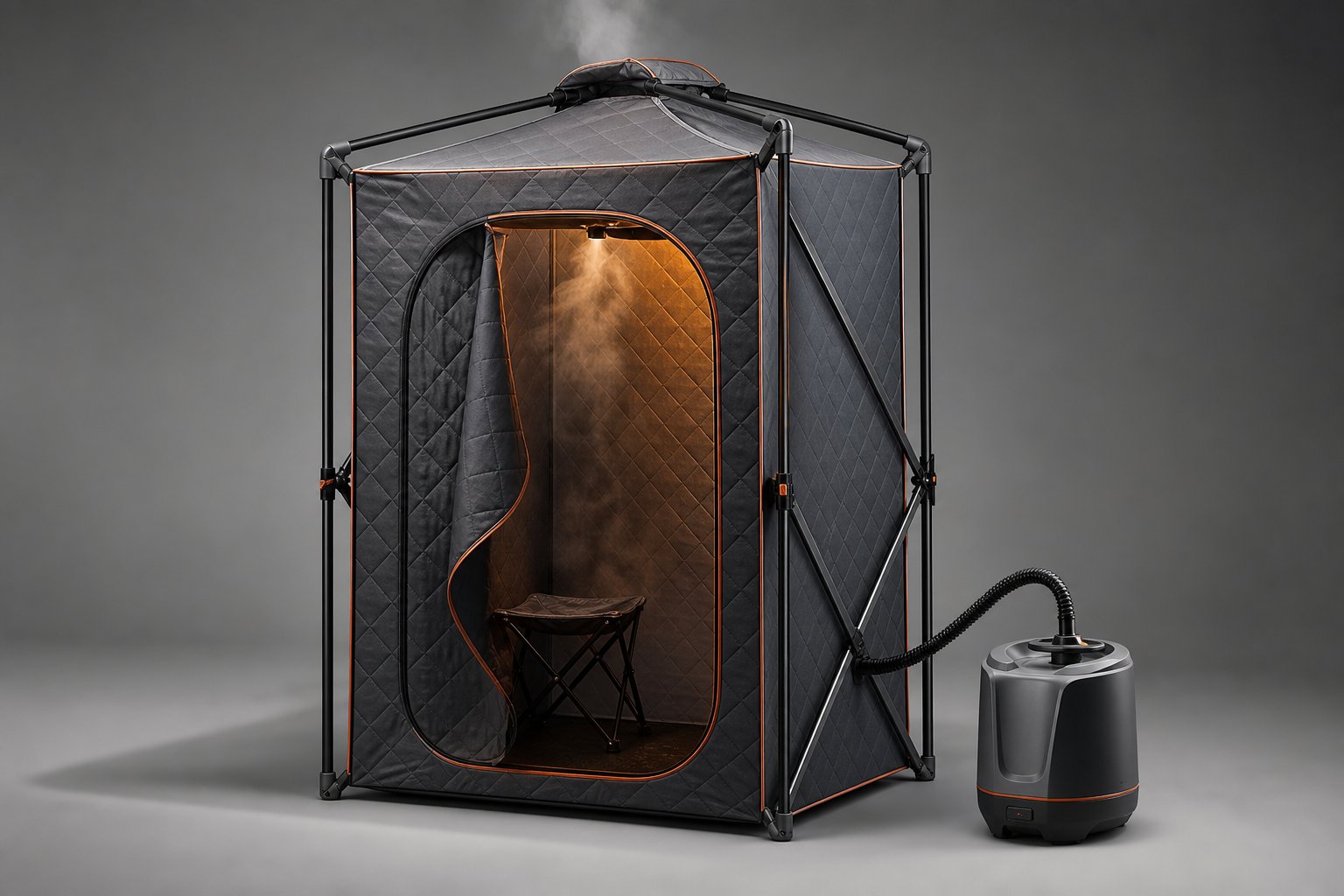
Portable steam saunas are the entry point to the whole sauna category for space- and budget-constrained buyers, but the category has a wider quality spread than fixed cabins, since a folding tent and a small steam generator are easier to build cheaply than a wooden cabin — which also means it is easier to build one that disappoints. Steam generator capacity, output time and tent-frame durability are the three specs that separate a portable sauna a buyer keeps using for years from one that gets folded up and forgotten after a month. This guide covers what to verify before listing.
Steam generator capacity: the spec that determines session length
Generator capacity is the specification most listings quote least precisely, despite it being the single biggest driver of whether a buyer's first session actually delivers the experience they expected. Steam generator wattage, commonly 800W to 2000W in this category, determines how quickly water converts to steam and how sustained the output is across a full session — an undersized generator produces a strong initial burst of steam that tapers off noticeably within 10-15 minutes, leaving the back half of a session cooler and less effective than the buyer expected. Ask suppliers for generator output specified in liters of water converted to usable steam per session, not just a wattage number in isolation, since wattage alone does not tell a buyer whether the unit can sustain a full 30-40 minute session without running dry.
Time-to-first-steam: the experience metric that drives abandonment
A portable sauna that takes 15-20 minutes to produce meaningful steam tests a buyer's patience before the product has delivered any value, and this wait time is a disproportionately common source of early abandonment — buyers who have a frustrating first experience are far less likely to become repeat users, regardless of how well the unit ultimately performs once it has fully warmed up and reached a stable operating temperature. A well-specified generator reaches usable steam output in under 10 minutes, and this figure is worth stating explicitly on a listing since it directly predicts first-use satisfaction.
Tent frame durability: what survives repeated fold-unfold cycles
Portable saunas are, by design, folded away between uses, which means the frame material has to survive hundreds of fold-unfold cycles without fatiguing or cracking — fiberglass poles are lighter and more common at the budget end but can develop stress fractures at joint points over time, while reinforced steel or aluminum frame components at joint-stress locations last meaningfully longer under repeated cycling. Fabric denier (thread thickness) affects both durability against tearing at stress points and how well the tent retains heat and steam, with higher-denier fabric generally justifying its cost through longer service life.
Water reservoir and drainage: the small detail with outsized review impact
Setup and teardown of a portable steam sauna involves filling and draining a water reservoir, and units with a poorly designed fill port or drainage system generate spillage that shows up disproportionately in negative reviews relative to how small a design fix it usually is. A clearly marked fill line, a secure cap that does not leak during operation, and a straightforward drain valve for teardown are inexpensive design elements that measurably reduce this category of complaint.
Seat and interior space: comfort during a 30-40 minute session
A session running 30-40 minutes needs a genuinely usable seat, not an afterthought stool wedged into the tent — a stable, appropriately sized seat with some back support meaningfully improves the experience compared to a bare folding stool, and interior tent volume should be specified honestly rather than measured at the tent's largest cross-section in a way that overstates actual usable headroom for a seated adult.
Safety features: auto shutoff and thermal cutout
An unattended steam generator running dry is a genuine safety and product-damage risk, and units with an automatic shutoff when water runs low or a thermal cutout preventing overheating are meaningfully safer than units without these features — this is a spec worth verifying and stating explicitly on a listing, since it is not visible in a product photo and buyers increasingly ask about it directly for a device that runs unattended near their skin for extended periods.
| Spec | Budget unit | Quality unit |
|---|---|---|
| Generator wattage | 800-1200W | 1500-2000W |
| Time to steam | 15-20 min | Under 10 min |
| Frame material | Basic fiberglass | Reinforced joints |
| Safety features | None or basic | Auto shutoff + thermal cutout |
Conclusion
Portable saunas succeed or fail on generator sustain time, first-use speed, frame durability under repeated folding and basic safety features — none of which are visible in a product photo, which is exactly why disclosing them explicitly on a listing differentiates a serious supplier from a race-to-the-bottom one. Send us your target price tier, expected session length and typical indoor or outdoor placement and our team will match the generator and frame spec accordingly.
Frequently asked questions
What steam generator wattage should a portable sauna have? Commonly 800W-2000W; ask for output specified in liters of steam per session, not wattage alone, to know whether it sustains a full session.
How long should a portable sauna take to produce usable steam? Under 10 minutes for a good experience; longer wait times are a common source of buyer abandonment before the product delivers value.
What safety features should a portable sauna have? Automatic shutoff when water runs low and a thermal cutout preventing overheating are meaningful safety differentiators worth verifying.