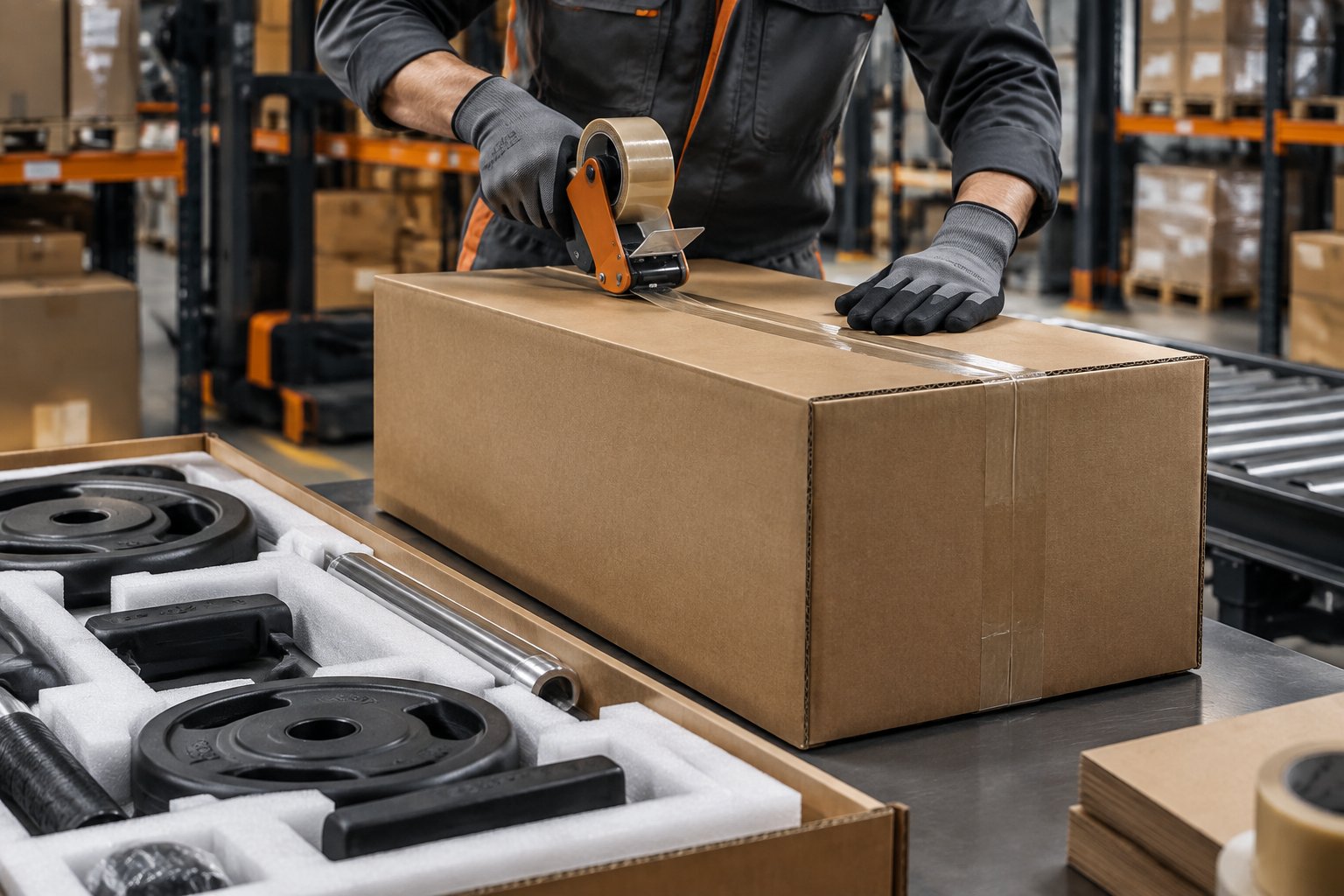
A flat-packed treadmill or power rack that arrives with a missing bolt or an unclear instruction manual generates a one-star review regardless of how well-engineered the product itself is, because for a large share of buyers, assembly difficulty is functionally indistinguishable from product quality in their overall impression. Overseas warehouse services that pre-assemble, pre-check hardware completeness, or at minimum pre-inspect units before final-mile delivery directly address the single largest controllable source of fitness equipment review complaints that has nothing to do with the product's actual engineering.
Why assembly difficulty gets blamed on product quality
Buyers assembling furniture-scale fitness equipment for the first time rarely distinguish between "this product is poorly engineered" and "this assembly process was confusing or incomplete" in their overall satisfaction — a missing bolt or an ambiguous instruction diagram generates the same frustrated review regardless of whether the underlying frame, steel quality and load rating are excellent. This makes assembly experience a genuine product-quality lever from the buyer's perspective, even though it is technically separate from engineering quality, and it is the single most controllable factor a seller can address through warehouse services rather than factory-level changes.
Full pre-assembly: eliminates the problem but changes the delivery model
An overseas warehouse that fully assembles a rack or bench before final-mile delivery removes assembly-related complaints entirely, since the buyer receives a ready-to-use unit rather than a box of parts — but this service tier requires larger-vehicle delivery capable of handling an assembled frame, adds meaningful warehouse labor cost per unit, and is genuinely better suited to B2B channels (gyms, studios) where delivery logistics already accommodate large items than to typical residential parcel delivery, where an assembled rack does not fit standard last-mile delivery infrastructure.
Hardware-completeness pre-check: the cost-efficient middle option
A warehouse service that opens each flat-pack unit, verifies every bolt, washer, tool and instruction page is present and correctly labeled, then repackages before shipment addresses the single most common assembly complaint — missing hardware — without the cost and delivery-model changes full pre-assembly requires. This is the service tier best suited to consumer parcel delivery channels, since it preserves the flat-pack shipping economics that make residential delivery affordable while eliminating the specific failure mode most responsible for assembly-related one-star reviews.
Pre-inspection for transit damage: catching problems before the customer does
A warehouse inspection step before final-mile delivery — checking for crushed corners, dented frames or visible shipping damage — catches problems that occurred during international transit before they reach the customer, converting what would otherwise become a delivered-damaged return into a warehouse-caught defect handled without ever involving the end buyer. This step is relatively low-cost relative to the return-processing and reputation cost it prevents, and is worth including even for sellers who do not invest in pre-assembly or hardware pre-check.
Matching service tier to channel
The right warehouse service investment depends on sales channel: consumer parcel delivery (Amazon, DTC ecommerce) favors hardware pre-check and transit-damage inspection, since these preserve shipping economics while addressing the most common complaints; B2B and premium channels (gym equipment sales, studio buildouts) favor full pre-assembly, since the buyer's delivery infrastructure and price tolerance both support it, and the white-glove experience itself becomes a competitive differentiator in that channel.
Documenting the service as a listing differentiator
Sellers who invest in warehouse pre-check or pre-assembly services should state this explicitly on product listings rather than treating it as an invisible operational detail — "hardware verified before shipment" or "delivered fully assembled" are concrete claims that address a real buyer anxiety (will this arrive complete and usable) and differentiate a listing from competitors who ship factory-direct without any intermediate check. Pricing for these services varies by warehouse and region, and it is worth requesting itemized quotes — per-unit inspection cost, per-unit assembly cost, and any repackaging fees — rather than accepting a bundled rate, since the itemized numbers let you match each service tier to the specific SKU and channel where it actually pays for itself rather than paying bundled rates across everything you ship.
| Service tier | Addresses | Best channel |
|---|---|---|
| Hardware pre-check | Missing parts complaints | Consumer parcel |
| Transit damage inspection | Shipping damage returns | All channels |
| Full pre-assembly | All assembly complaints | B2B, premium |
Conclusion
Assembly difficulty and transit damage are, from a buyer's perspective, indistinguishable from product quality, which makes overseas warehouse pre-check and assembly services a genuine review-management tool rather than just an operational cost line. Match the service tier to your channel — hardware pre-check for consumer parcel, full pre-assembly for B2B — and state the service explicitly on listings. Tell us your channel mix and we will recommend the matching warehouse service tier.
Frequently asked questions
Why does assembly difficulty affect product reviews so heavily? Buyers rarely distinguish between poor engineering and a confusing or incomplete assembly process in their overall satisfaction rating.
Is full pre-assembly worth it for consumer parcel delivery? Usually not - assembled units don't fit standard last-mile delivery infrastructure; hardware pre-check is more cost-efficient for this channel.
What does a transit damage inspection actually catch? Crushed corners, dented frames or visible shipping damage from international transit, before the unit reaches the customer.