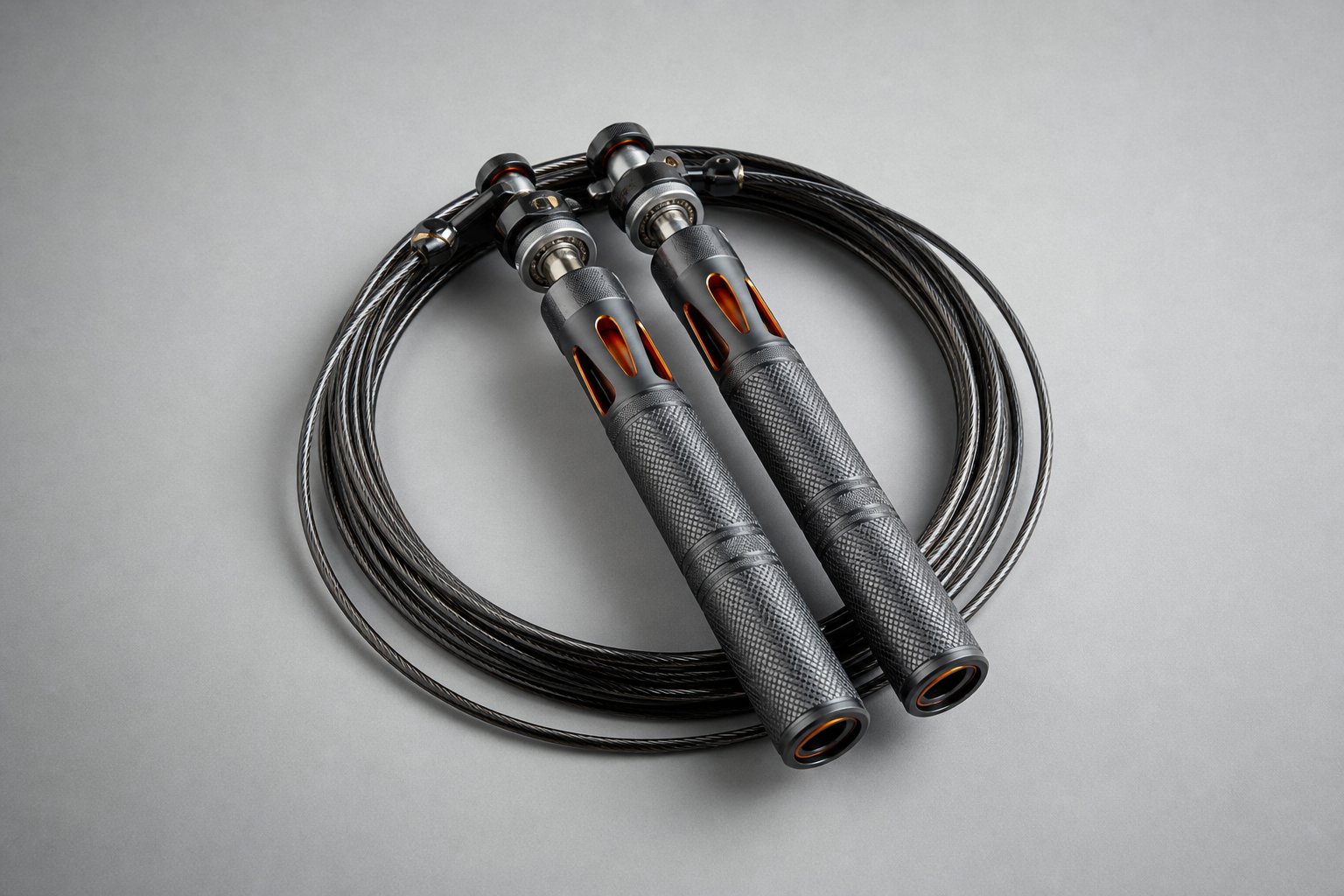
A jump rope looks like the simplest product in fitness e-commerce — a handle, a cord, a price tag that clears carts — and that simplicity is exactly why sellers underestimate it. The category splits into distinct products with distinct buyers: wire speed ropes for conditioning athletes, weighted ropes for strength-endurance work, cordless ropes for apartment dwellers with low ceilings, and counting ropes for buyers who want their skips tallied without an app. Picked correctly, a rope line is one of the most parcel-friendly traffic drivers you can stock: it weighs little, ships in retail-ready color boxes, and survives parcel networks without packaging heroics. Picked carelessly, it becomes a repeat-complaint generator, because jump rope reviews concentrate on two mechanical details most listings never mention — the bearing system inside the handle and the interface where the rope meets it. This article maps the types, dissects those two failure points, and shows how to build the accessory bundle that lifts order value.
The four types and who actually buys them
Our training-accessories category groups jump ropes into three build families — wire cable, cordless and counting — and it is worth being precise about how buyers map onto them. The wire speed rope is the conditioning athlete's tool: a thin steel cable, often with an adjustable length mechanism, built to rotate fast for double-unders and timed intervals. Its buyer cares about spin quality and hand speed, and is the most likely to leave a detailed technical review. The weighted rope trades rotation speed for load: heavier handles or heavier corded builds turn skipping into strength-endurance work, and its buyer is usually a general-fitness user chasing a more complete workout, not a competition skill. The cordless rope attaches short weighted nodules instead of a full cable; it produces the rhythm of skipping with none of the floor strikes, which makes it the default recommendation for apartments, low ceilings and beginners who have not yet learned the timing. The counting rope overlays a mechanical or digital tally on any of the above builds, and sells to buyers who want visible progress without connecting anything to a phone.
These are different listings, not variants of one listing. The athlete searching for a double-under rope and the apartment beginner searching for a quiet cordless rope type different queries, read different reviews and forgive different flaws. Structuring your catalog around the four intents costs nothing at sourcing time — the factory tooling overlaps heavily — and immediately lifts conversion because each page can make a specific promise.
Where reviews are won and lost: bearings and the rope-handle interface
Almost every negative jump rope review traces back to one of two mechanical points. The first is the bearing system. A rope that must be spun fast lives or dies by how freely the handle rotates around the cable: quality builds use ball bearings or well-toleranced bushings so the handle spins smoothly instead of dragging, and the difference is felt within the first minute of skipping. Dragging rotation shows up in reviews as tired wrists, trips mid-jump and the sentence that kills conversions: it does not spin smoothly. When qualifying suppliers, ask what rotates inside the handle — ball bearing, bushing, or bare metal on plastic — and demand a sample you can spin for a full minute, because this is one spec a product photo can never tell you.
The second failure point is the interface where the cable fixes into the handle. Cheap builds thread the cable through a fixed hole; the cable frays at the entry point, length adjustment becomes a pliers-and-patience project, and the fix-it video your customer finds online is about a different rope. Better builds use a threaded adjustable clamp with a locking nut, so length can be set cleanly for the user's height and the cable can be replaced without destroying the handle. This same interface is where your spare-parts strategy lives: spare cables, end caps and fixing screws cost very little per set, ship in an envelope, and turn a would-be one-star return into a five-star service story. We treat the parts kit as part of the rope SKU, not as an afterthought, and we advise every seller we work with to do the same — consumable parts are the cheapest review insurance in this category.
Side by side: the listing-relevant comparison
| Dimension | Wire speed rope | Weighted rope | Cordless rope | Counting rope |
|---|---|---|---|---|
| Core buyer | Conditioning athletes, CrossTraining, boxing | General fitness, strength-endurance seekers | Apartment users, beginners, warm-ups | Progress-oriented home users |
| What they buy | Spin speed and hand feel | Load and workout density | No strikes: rhythm without the floor contact | Visible tally without an app |
| Skill demand | Highest — timing learned | Moderate | Lowest — timing not required | Matches base rope build |
| Noise and floor impact | Cable strikes on hard floors | Heavier strikes; mat advised | Near-silent; no floor contact | Matches base rope build |
| Review hotspot | Bearing smoothness, cable fray | Handle grip under sweat, cord wear | Nodule weight honesty | Counter accuracy and battery |
| Packaging and channel | Retail color box, parcel-friendly | Retail box, parcel-friendly | Retail box, ideal first dropship SKU | Retail box with battery declaration per carrier |
Two packaging notes worth their weight: first, counting ropes with installed batteries must be declared per carrier rules — ask your supplier to confirm the battery configuration before you list. Second, all four types fit the small-parcel color-box standard that our accessories line is built around, which is what makes the category so efficient in cross-border parcel and dropship channels.
Building the bundle: accessories that raise order value
Because the base product is low-ticket, the margin in jump ropes lives in the bundle. A rope plus a spare cable plus a skipping mat plus a carry bag converts a single-item cart into a starter kit, and each addition is light enough not to disturb parcel economics. The mat angle deserves emphasis: floor-strike noise is the corded rope's honest weakness in apartments, and a thin skipping mat answers the objection inside the same order rather than losing it to a competitor's cordless listing. Weighted ropes pair naturally with wrist wraps or grips from the same accessories shelf; speed ropes pair with a second spare cable pitched as the progression. None of this requires new tooling — it requires the discipline to build the kit at sourcing time instead of discovering it in month three when the ad data has already told you which bundle sells.
Channel fit and the commercial frame
Jump ropes are a textbook first dropship SKU: light, small, robust in transit, and easy to blind-ship in neutral packaging with no price tags, no supplier information and no promotional inserts. Our dropshipping program runs such SKUs through parcel lines with ERP integration for Shopify, WooCommerce and Amazon, and a specialist responding within 24 hours; quality accessories for e-commerce are packed to a retail color-box standard so they can go straight from the parcel bag to the customer. For private-label programs on our line, the indicative commercial frame reads: stocked labeled goods from 100 units, light customization from 500 units, sampling in 7-12 days, production in 20-35 days, with 48-hour dispatch on in-stock labeled orders — all subject to the formal quotation. Home fitness demand keeps growing — the global home fitness equipment market is projected from USD 12.88 billion in 2025 to USD 22.99 billion by 2034 at a 6.81 percent CAGR per Fortune Business Insights — and a rope is usually the cheapest entry point a new home-training customer ever buys. Being the brand that sold it well is worth more than the margin on the rope itself.
Conclusion
The jump rope category rewards specificity. Split the catalog into wire speed, weighted, cordless and counting listings; win the review section by specifying bearing quality and a threaded, adjustable rope-handle interface with spare parts in the box; and raise order value with mats, spare cables and bags assembled into bundles at sourcing time. Qualify suppliers by spinning a sample for a full minute and asking what, exactly, rotates inside the handle. Send us your audience and price tier, and we will return a rope-line configuration with indicative quotes — as a source supply chain partner inside China's fitness equipment clusters, we would rather hand you the whole kit, parts and packaging included, than a single SKU that generates its own returns.
Frequently asked questions
Which jump rope type should a new seller stock first? Start with a cordless rope for apartment and beginner traffic plus one wire speed rope for the conditioning audience. Between them they cover the two largest search intents, both ship in retail color boxes through parcel channels, and neither requires battery declarations.
Why do cheap jump ropes get poor reviews? Almost always bearings and the rope-handle interface. Dragging rotation reads as tired wrists and mid-jump trips, and a fixed cable hole frays the wire while making length adjustment frustrating. Specify ball-bearing or well-toleranced rotation and a threaded adjustable clamp, and request spinning samples before ordering.
Are cordless jump ropes a real workout or a gimmick? They deliver the rhythm and shoulder-and-core demand of skipping without floor strikes, which makes them a legitimate product for apartments, low ceilings and beginners learning timing. List them honestly as rhythm and conditioning tools, not as full skill replacements for corded double-unders.
What minimum order quantity applies to private-label ropes? On our indicative frame: stocked labeled goods from 100 units, light customization from 500 units, sampling in 7-12 days and production in 20-35 days, with 48-hour dispatch on in-stock labeled orders. Confirm final terms in a formal quotation before listing.