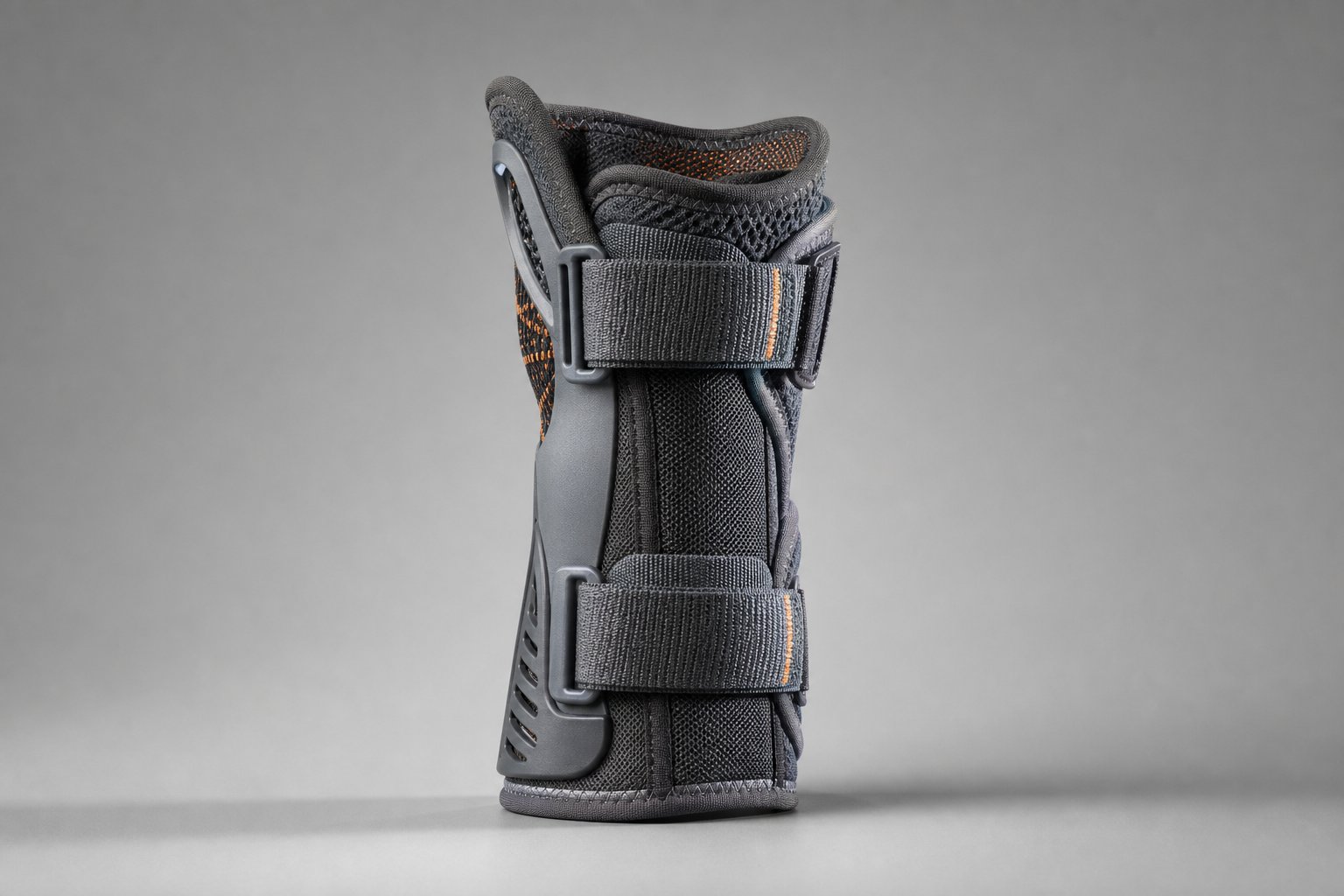
Ankle and wrist braces sit in an unusually returns-prone corner of the fitness catalog: they are small, inexpensive relative to shipping cost, and almost always purchased without trying them on, which means the sizing chart is doing all the work that a fitting room would otherwise do. A generic S/M/L label borrowed from apparel sizing consistently underperforms a circumference-based chart in this category, because ankle and wrist dimensions do not scale predictably with height, weight or shoe size the way garment sizes loosely do. This guide walks through how to build a chart that actually reduces returns, not just one that looks thorough on a listing page.
Measure the joint, not a proxy
The single most common sizing-chart mistake in this category is measuring or labeling by shoe size or glove size as a proxy for ankle or wrist circumference, when the actual dimension that determines whether a brace fits is the circumference at the specific anatomical point the brace wraps — mid-ankle directly over the joint for ankle braces, and the wrist bone (the styloid process, the bony prominence on the outside of the wrist) for wrist braces. Shoe size and glove size correlate only loosely with these measurements across different body types, which is exactly why proxy-based sizing generates disproportionate returns relative to how simple direct circumference measurement actually is.
Centimeters, and enough bands to matter
Publish the chart in centimeters as the primary unit — it is the measurement standard for the large majority of the global buyer base, and pairing it with an inch conversion for US-centric channels costs nothing and serves both markets from one chart. Five to six size bands spaced roughly 1.5-2cm apart consistently outperform the generic three-band S/M/L approach in return-rate data, because ankle and wrist circumference varies enough within a population that three broad bands leave meaningful gaps where a buyer sits between two labels and guesses wrong. The added production complexity of stocking finer-grained sizes is real but modest compared to the customer-service and reverse-logistics cost of a return.
Fabric stretch changes how precise the chart needs to be
Not all braces need the same sizing precision, and fabric construction is the reason why. A brace built from genuine multi-directional stretch knit — as opposed to a woven fabric with hook-and-loop closure doing all the size accommodation — tolerates a wider circumference range per size band without sacrificing fit or support, which means fewer bands can serve the same population accurately. A woven-fabric brace with a fixed closure range, by contrast, needs a tighter chart with more bands to avoid gaps. Knowing which construction a supplier uses should directly inform how many size bands your chart needs.
Show the measurement, don't just describe it
Text instructions alone ("measure around your ankle") generate meaningfully more measurement error than a simple annotated photograph or diagram showing exactly where the tape should sit and how it should be held — flat against skin, not over thick socks or bulky clothing that inflates the reading. This is a near-zero-cost addition to a listing that measurably reduces the single largest source of sizing-chart-driven returns: buyers measuring the wrong location or measuring over clothing and picking a size that doesn't match their actual joint circumference.
| Size | Ankle circumference | Wrist circumference |
|---|---|---|
| S | 18-20cm | 14-15.5cm |
| M | 20-22cm | 15.5-17cm |
| L | 22-24cm | 17-18.5cm |
| XL | 24-26cm | 18.5-20cm |
| XXL | 26-28cm | 20-21.5cm |
Testing the chart before it ships, not after returns arrive
The cheapest way to validate a sizing chart is to have it measured by people who did not write it — a handful of colleagues or sample testers measuring themselves against the published instructions and reporting whether they landed on the size that actually fit. This single round of testing catches ambiguous instructions and awkwardly spaced bands before a chart goes live, rather than after the first batch of returns arrives with a pattern that only becomes visible in aggregate. Suppliers who have already run this exercise on their own chart, and can show it, are worth a modest price premium over ones who have not, since a validated chart is doing real work reducing your return-processing cost every single month it stays live on a listing, quietly, without needing any further attention from your team.
\nConclusion
A circumference-based chart, measured at the correct anatomical point, in centimeters, with enough bands and a clear photo showing how to measure, is the single highest-leverage change available for cutting returns in the brace category — far more effective than any change to the brace itself. Send us your target size distribution, fabric preference and primary market region and we will help build a chart calibrated to your buyer base.
Frequently asked questions
Should I size braces by shoe size or glove size? No — shoe and glove size correlate only loosely with ankle and wrist circumference across different body types; measure the actual joint circumference instead.
How many size bands should a brace chart have? Five to six bands spaced 1.5-2cm apart consistently outperform a generic three-band S/M/L chart in return-rate data.
Do stretch-knit braces need as many size bands as woven braces? No — genuine multi-directional stretch knit tolerates a wider circumference range per band, so fewer bands can serve the same population accurately.